[The Stage is on Fire] is a page-turner in which, much like life, there are no easy answers and yet each step of the journey yields insight and hope. This work of heart must not be missed!
Melanie Faith
Creative Writing Teacher, Essayist & Poet.
Katie Steedly’s first-person piece [The Unspeakable Gift] is a riveting retelling of her participation in a National Institutes of Health study that aided her quest to come to grips with her life of living with a rare genetic disorder. Her writing is superb.
The Society of Professional Journalists
In recognition of receiving the Dateline Award for the Washingtonian Magazine essay, The Unspeakable Gift.
I thank you … It is the authenticity of your “class notes”; and it is the delicacy and skill with which you present the nuances of classroom life and the actuality of your students’ and fellow teachers’ lives.
Maxine Greene
Philosopher and Education Scholar
Enter your email here to receive Weekly Wide-Awake
back
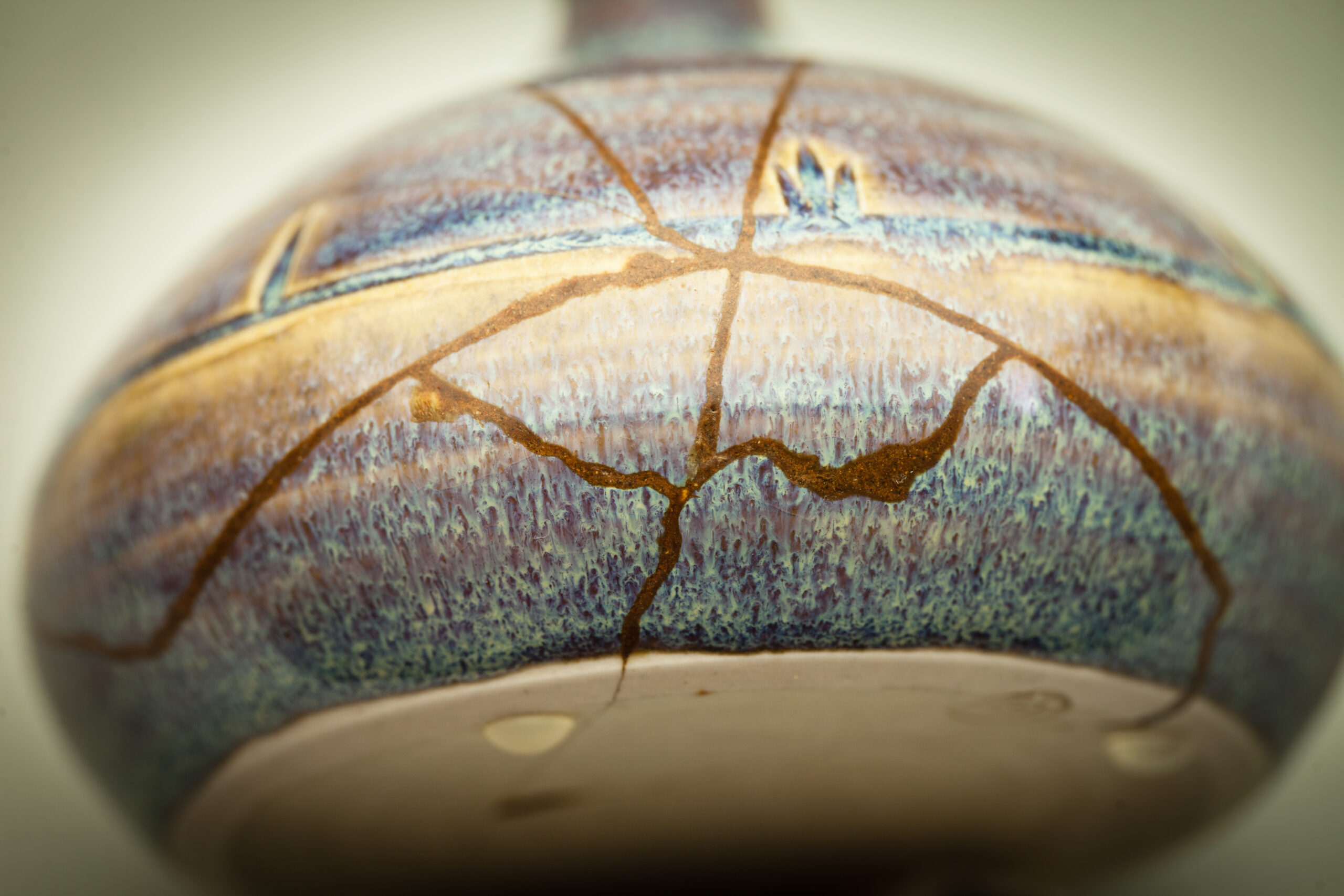
The Delight of Golden Joinery
My childhood bedroom walls were adorned with beautiful china plates carefully curated by the women in my family — my mother, grandmother, and great-grandmother. Kittens, butterflies, and flowers, mainly, watched over my comings and goings well into my adulthood. Gradually, several broke during moves and time and my need to keep them with me as I grew up. In their gifting and their breaking, they are a delight. In their gifting and their breaking, they tell a story. They tell the story of loving and growing. They tell a story about cherishing and changing. They tell a story of beauty and brokenness. The plates have been with me my entire life. I wrapped them in bubble wrap and kept them safe, always intending to do something with them.
I became fascinated with kintsugi years ago. Generally speaking, kintsugi is the art of mending broken china with golden/metallic glue. More broadly, kintsugi — also known as ‘“golden joinery’” or kintsukuroi“golden repair” — is an Eastern philosophy that speaks to finding beauty in the broken. I am not a kintsugi expert, but the idea that our brokenness is our beauty deeply resonates. Finding beauty in brokenness is freeing. It flips the perfectionist script. It turns “fixing” on its ear. It embraces wholeness from the most vulnerable place imaginable. It says, “You are safe and loved just as you are.”
Eventually, I kintsugied my childhood plates. It was not easy. I bought a kit that promised to guide the process. I set up a table — separate from our dinner table — to allow for sufficient workspace and drying time. I wore the right gloves and lined up all the materials — glue, golden glitter, paper towels, and a wet washcloth. I learned there is a rhythm to kintsugi. Know how much glitter to mix with glue. Know the right amount of glue to use on each piece and that it dries very quickly. You must firmly hold the broken pieces together until they securely stay in place. Over a few days, the plates were completed. They are imperfect and beautiful now.
I have moved a lot, so many things have broken: the plates from my childhood walls, pieces of Hadley Pottery (if you are from Louisville, Kentucky, you know what that means) gifted us at our wedding, a vase from an artist whose name I cannot find. All this is to say, I have several broken pieces — parts of me, my story — that require golden joinery. Golden joinery feels more complex than simply slapping down some golden glue and buying some plate stands. It feels like a process of storytelling and mending the brokenness with gold. It feels like healing from a golden place, like a sunset or the middle of a warm hug. It feels like coming home. Home in all its beauty and brokenness. And I say, golden joinery, holy, holy.
Read this post on Substack and subscribe to the Wide-Awakeness Project
About Katie

From Louisville. Live in Atlanta. Curious by nature. Researcher by education. Writer by practice. Grateful heart by desire.
Buy the Book!

The Stage Is On Fire, a memoir about hope and change, reasons for voyaging, and dreams burning down can be purchased on Amazon.