[The Stage is on Fire] is a page-turner in which, much like life, there are no easy answers and yet each step of the journey yields insight and hope. This work of heart must not be missed!
Melanie Faith
Creative Writing Teacher, Essayist & Poet.
Katie Steedly’s first-person piece [The Unspeakable Gift] is a riveting retelling of her participation in a National Institutes of Health study that aided her quest to come to grips with her life of living with a rare genetic disorder. Her writing is superb.
The Society of Professional Journalists
In recognition of receiving the Dateline Award for the Washingtonian Magazine essay, The Unspeakable Gift.
I thank you … It is the authenticity of your “class notes”; and it is the delicacy and skill with which you present the nuances of classroom life and the actuality of your students’ and fellow teachers’ lives.
Maxine Greene
Philosopher and Education Scholar
Enter your email here to receive Weekly Wide-Awake
back
Spit and Spaghetti #19
Pitches from Wind and Wall
Andy Warhol Foundation Arts Writers Grants
Project Title
Feeding The Good Wolf: Canis Rufus and the Power of Public Art
Project Description
I live next door to a public art installation, Canis Rufus, on the Atlanta Beltline. The article will explore art as love letter, environmental justice story, and neighborhood historical record.
Project Description
Canis Rufus sits on the Atlanta Beltline. The Beltline is a 22-mile interurban trail surrounding Atlanta’s core. I have lived on the Beltline for several years. My connection to Beltline art frames how I tell the Canis Rufus story. I pay attention to and write about Beltline art consistently in my newsletter. Canis Rufus is a gift to everyone who moves along the Beltline.
I began researching Canis Rufus in the summer of 2025, having moved to the Virginia Highland neighborhood across the street from the B. Mifflin Hood Brick Factory, next to Canis Rufus.
This article will be situated within a larger book project exploring the life of B. Mifflin Hood and the B. Mifflin Hood Brick factory. B. Mifflin Hood advocated for convict- free labor in the late 19th and early 20th centuries. The overarching book project will look closely at convict leasing and the struggle to end the practice. (It was outlawed in Georgia in 1908.) It will discuss convict leasing’s relationship to current public funding of prison labor. It will analyze today’s prison labor situation and offer a path forward based on past legal, political, and social progress through Hood’s example. It will offer a story — going forward — of history’s relevance to our current circumstance, leadership toward social justice, and humanity and moral clarity during difficult times. Within the larger project, paying attention to Canis Rufus will highlight the arts capacity to inspire social and environmental justice.
Contextualize this project in relation to existing writing on the subject.
This article will bring art into the fore in a discussion of 1. environmental and social justice, 2. historical connection and relevance, and 3. political awareness and action. Situating art within big debates affirms art’s role in responding to environmental and societal need. An extensive literature review reveals writing about B. Mifflin Hood, convict leasing, and the current prison labor situation lives siloed in academic, political, and legal spaces. Most people do not know the convict leasing story. They believe the rhetorical and constitutional end of slavery, ended slavery in the United States. They struggle to connect our common humanity to a humanity that includes people who are or have been incarcerated. They do not understand the ecosystem — the depth and scope — of public funding and private profits that occurs within our criminal justice system. The arts role in restoring humanity — our connection to one another — will be part of the story.
Contextualize this project in relation to your own writing.
“Artists and scientists are activists. They look at the world as changeable and they look upon themselves as instruments for change. They understand that the slice of world they occupy is only a fragment but that the fragment is intrinsically connected to the whole. They know that action matters.” ― Anne Bogart, What’s the Story: Essays About Art, Theater and Storytelling
This project presents a full-circle moment. My academic training and professional experience have utilized research to connect the fragment to the whole. In writing a dissertation and evaluation reports, books and articles, white papers and essays, I have connected the fragment to the whole. In writing newsletters and travel writing, policy briefs and curricula, podcast scripts and ghostwritten pieces, I have connected the fragment to the whole. Canis Rufus — in concept, materials, and aesthetic — connects the fragment to the whole.
Who are the artists central to your project? Describe your reasons for selecting these particular artists.
I was introduced to the work of artists Laura Adams and Andrew Feiler — the owners and restorers of the historically designated B. Mifflin Hood Brick Factory building and artists responsible for inspiring and shepherding the Canis Rufus project — in an article about Canis Rufus in the Atlanta Jewish Times.
While interviewing Adams and Feiler, I learned that during the summer of 2020 a Request for Qualifications was released to create a work of public art. Responses were received from around the world and Chris Condon was chosen. A press release announcing the project describes Canis Rufus as three life sized Ferro Cement wolves installed where Greenwood Ave and the Atlanta Beltline meet. Condon used concrete, elevated railroad ties, and repurposed bricks from the Virginia Highland neighborhood to tell the story of the endangered — indigenous to Georgia — red wolf.
Please give us a sense of where your project stands now. What writing do you plan to complete during the grant year (2027)?
I have been writing about the B. Mifflin Hood Brick Factory, and Canis Rufus, since summer of 2025. I have developed research methodology and written grant proposals, article pitches, and newsletter posts. I have conducted interviews and reviewed literature. Work on the Canis Rufus article during the grant year will focus on continued exploration of 1. the artwork, 2. the connection between the artwork and the brick factory, and 3. the environmental conservation story that drove the artwork.
Lead Writer and Editor, Arts and Sciences, Ohio State University
I am a writer, researcher, and storyteller. I have written about the arts and sciences for leading organizations such as The John F. Kennedy Center for the Performing Arts, Blue Man Group, NASA, Ohio University, the University of Cincinnati, several state Departments of Education, and the United States Department of Education. I received my Ph.D. — focused on the arts — from the University of Texas at Austin.
I am uniquely qualified to be your Lead Writer and Editor. I have been a ghostwriter and thought-partner with institutions from coast to coast. I have created high quality deliverables from notes and conversations. I have communicated complex information with precision and clarity. I have crafted policy briefs, blog posts, newsletters, annual reports, and other projects following multiple style guides, close editorial guidance, and tight timelines.
I have written successful grants and proposals throughout my career, too. As a program evaluator, research associate, and contractor, I have participated in the entire grant cycle — from all sides of the funding table. Past successful grants, proposals, and reports have included those to the United States Department of Education, state education and public health agencies, and foundations of varying scope and size. Specific to arts funding, my experience — in research and evaluation at leading arts organizations — equips me to creatively garner funds for the breadth of arts and culture programs.
Director of Learning Application, Prison Journalism Project
What draws you to Prison Journalism Project?
I taught writing at a men’s federal prison in South Florida for several years. I wrote about the experience in The Elephant Journal — “What I Learned about Gratitude from Teaching Writing in a Federal Prison.” — https://www.elephantjournal.com/2021/01/how-federal-prisoners-schooled-me-on-the-meaning-of-gratitude. That experience crystalized my belief in our common humanity, my understanding of our justice system, and my commitment to social justice.
Why do you want to work with writers in prison?
I was driven to work with writers in prison as a result of my desire to live compassionately, my conviction that empathy is a superpower, and my dedication to bringing my knowledge, skill, and ability to others — including people who have experienced incarceration. Knowledge is power. Journalism is key.
Why are you the right person for this role?
I am an experienced applied researcher and freelance writer. I possess the technical skill, creative capacity, and philosophical perspective to successfully pursue this work. My work — that extends across academia, policy, and arts and culture — has relied upon communicating complex information with depth and clarity. This position will utilize the breadth of my experience teaching writing, developing curricula, and crafting organizational communication to, as Prison Journalism Project describes, “create a network of prison journalists.”
Choose two key skills from the job description and explain the expertise you bring to them.
In addition to my technical expertise in curriculum and instructional design, data and assessment, and partnership development, my career is built upon equity-centered practiceand communication and writing. As the daughter of a high school English teacher — and trained as an English teacher myself — my career began as an AmeriCorps member in an education scholarship program in Indiana helping middle school students get to, and succeed in, college. Equity — and its deep connection to communication and writing— is not separate from big ideas like human rights and social justice. Communication and writing are the roots of equity. Again and again, in whatever roles I have held, the basic precept that we must be story seekers, story collectors, and story tellers has proven true. We must also teach others to seek, collect, and tell stories.
What are the three most important journalism skills to teach to beginners? Explain your reason for each in 1-2 sentences?
According to the National Council of Training of Journalists, key journalism skills center on investigative curiosity, compelling storytelling, ethical judgment, and multimedia adaptability. Drilling down on specific skills includes reporting and research, storytelling and communication, and media expertise. Researching and Reporting — As an applied researcher and program evaluator, I understand the value of effective data collection, analysis, and reporting. Researching and reporting are central to promoting sound science, building effective policy, and creating healthy society. Storytelling and Communication — Storytelling and communication are the heart of researching and reporting the news. Writing mechanics strengthen through reading and writing. Media Expertise — Our evolving media environment demands we establish bedrock journalism skills to reach audiences across age, ability, and context. Media expertise allows journalists to effectively disseminate quality information, meet allcommunity members where they are, and build understanding that supports interdependence, health, and humanity.
Spit and Spaghetti #1
Spit and Spaghetti #2
Spit and Spaghetti #3
Spit and Spaghetti #4
Spit and Spaghetti #5
Spit and Spaghetti #6
Spit and Spaghetti #7
Spit and Spaghetti #8
Spit and Spaghetti #9
Spit and Spaghetti #10
Spit and Spaghetti #11
Spit and Spaghetti #12
Spit and Spaghetti #13
Spit and Spaghetti #14
Spit and Spaghetti #15
Spit and Spaghetti #16
Spit and Spaghetti #17
Spit and Spaghetti #18
About Katie
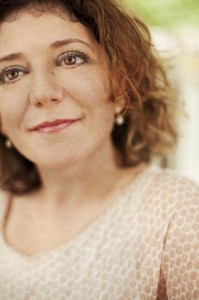
From Louisville. Live in Atlanta. Curious by nature. Researcher by education. Writer by practice. Grateful heart by desire.
Buy the Book!
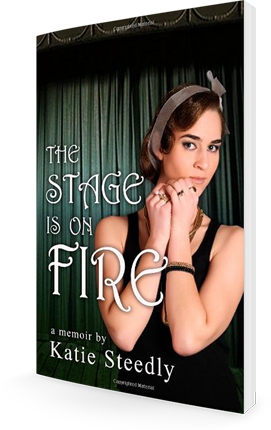
The Stage Is On Fire, a memoir about hope and change, reasons for voyaging, and dreams burning down can be purchased on Amazon.