[The Stage is on Fire] is a page-turner in which, much like life, there are no easy answers and yet each step of the journey yields insight and hope. This work of heart must not be missed!
Melanie Faith
Creative Writing Teacher, Essayist & Poet.
Katie Steedly’s first-person piece [The Unspeakable Gift] is a riveting retelling of her participation in a National Institutes of Health study that aided her quest to come to grips with her life of living with a rare genetic disorder. Her writing is superb.
The Society of Professional Journalists
In recognition of receiving the Dateline Award for the Washingtonian Magazine essay, The Unspeakable Gift.
I thank you … It is the authenticity of your “class notes”; and it is the delicacy and skill with which you present the nuances of classroom life and the actuality of your students’ and fellow teachers’ lives.
Maxine Greene
Philosopher and Education Scholar
Enter your email here to receive Weekly Wide-Awake
back
Living the Comma #55
Gratitude #3. Interdependence. Hip-Hop. Orientation. Gratitude Conversations. Gratitude Games.
Living the Comma
Living the Comma is a writers community connecting people with a creative process, a writing practice, and a spiritual path. Everyone is welcome. No writing experience necessary.
Writers Hour — a weekly hour to write together — occurs every Thursday from 12:00-1:00 EST through May. Join via this link.
UPDATED — Living the Comma 2026-2027 Meeting Dates: September 1. October 13. November 10. December 8. January 12. February 9. March 9. April 13. May 11.
Living the Comma meetings occur at Virginia Highland Church from 7:00 to 8:30 EST. Join via our VIRTUAL MEETING LINK if you cannot be present in person.
The Living the Comma newsletter is published weekly.
Interdependence Frees Us
Gratitude is complicated. Feelings of dependence—and interdependence—can be both elusive and resisted, mostly because they are caught up with soul-crushing ideas of obligation and debt. But if gratitude is mutual reliance upon (instead of payback for) shared gifts, we awaken to a profound awareness of our interdependence. Dependence may enslave the soul, but interdependence frees us. ― Diana Butler Bass, Grateful: The Transformative Power of Giving Thanks
Gratitude is indeed complicated. Aliveness balances the desire to numb. Awakeness balances the desire to sleep. Awareness balances the desire to lay burden down. I am thinking about gratitude in tough times — in times of failure and loss and anger, when we have been shattered, crushed, and stepped on, when we cry on the bathroom floor swimming in snot and tears. Butler Bass explains, “I learned new things about myself, about God, about life — all of it possible only because I was fired. I feel thankful.” This resonates because I have been fired. Multiple times. Multiple things. From jobs, relationships, dreams, finitude, permanence, beginner’s mind. Gratitude for it all clears the way for interdependence to emerge. Interdependence as the heart of how we make it through falling apart and back together. Interdependence as a recipe for deep joy in calm seas and storms. Interdependence as an antidote to anxiety and fear.
Gratitude is not a psychological or political panacea, like a secular prosperity gospel, one that denies pain or overlooks injustice, because being grateful does not “fix” anything. Pain, suffering, and injustice—these things are all real. They do not go away. Gratitude, however, invalidates the false narrative that these things are the sum total of human existence, that despair is the last word. Gratitude gives us a new story. It opens our eyes to see that every life is, in unique and dignified ways, graced: the lives of the poor, the castoffs, the sick, the jailed, the exiles, the abused, the forgotten as well as those in more comfortable physical circumstances. Your life. My life. We all share in the ultimate gift—life itself. Together. Right now. ― Diana Butler Bass, Grateful: The Transformative Power of Giving Thanks
Breathe in the idea that life is the ultimate gift. I want to say that again and again and again. Breathe in the idea that life is the ultimate gift. Breathe in the idea that life is the ultimate gift. Breathe in the idea that life is the ultimate gift. I want to sing that. That is a new story. Pain, suffering, and injustice are not the sum total of it all. When I digest what I have learned pursuing wide-awakeness for more than two decades, attending yoga retreats across continents, holding gratitude conversations while the world burns, teaching a gratitude-focused writing class in a federal prison, starting and stopping more gratitude practices that I can count, I am convinced our lives — our unique and dignified lives — are our ultimate gift.
Hip-Hop Saved Me
Hip-hop saved me. It gave me permission to use language in a certain way. It validated my community and my friends. It gave our slang a certain elegance. — Jason Reynolds
Gratitude is elegance. That rolls off my tongue when I say it. It is elegant to see gratitude as permission to fully live and weigh and judge. It is elegant to see gratitude as validation of community and kindness and strength. It is elegant to see gratitude as slang and short hand and poetry toward what works in our world. I might even go so far as to say gratitude — and the peace and grace and love that flow through it — is an antidote to fear. Jason Reynolds explains, “We’ve always been told to pretend as if we’re not afraid.” I want to suggest gratitude gives us permission to be afraid. To quake in our boots and question. To cuss and throw things. To scream into the abyss. To burn with the fire of a thousand suns. To do all that and still understand life is more than quaking, cussing, throwing, screaming, and burning. To experience gratitude for it all. Reynolds brings it back to children, “I do believe we can do better, be better. But we can’t hide behind fear. We can’t tuck truth between the cushions of comfort. We have to deal with it, really confront it, so that our children can live with a lot less weight. We owe it to them.” In that way, a gratitude practice — deeply wedded to life’s wholeness and honesty and warmth — lifts a weight from ourselves and future generations.
What We Orient Towards
How to be present to the gravity of this time in the life of the world, and keep body and soul together as we do so? What to turn away from and to orient towards? What is the work that is mine to do?” — Krista Tippett
We find what we seek. We find what we seek. We find what we seek. Think about that through a gratitude lens. That speaks to excavation’s beauty, healing’s journey, and attention’s power. That speaks to doing what we are meant to do. A gratitude practice tends the soul’s soil, extends our mind’s aperture, and softens the edges of our days.
But we can learn to work with negativity bias. That doesn’t mean that I think that we can all just flip the gratitude switch on. For better or worse, that’s not how life works — and in fact, gratitude is definitely not automatic for me. To this day, even speaking as someone who encourages the practice, I have found myself thinking at times that gratitude can seem like a glorified form of denial, a way of papering over problems by posting inspirational quotes to social media, by labeling everything in life “a blessing.”
But each time that dismissive instinct kicks in, I encourage myself to remember that being grateful doesn’t mean I have to keep a gratitude jar that counts my blessings. It just means I can reset my thoughts, just like in meditation, and choose instead to gently settle my attention on something positive. We don’t erase the pain — it’s still there — but we can broaden our perspective by opening to our pain and also opening to things other than the suffering we feel. — Krista Tippett
As Tippett suggests, broadening our perspective beyond our pain and suffering is a decision. A gratitude practice strengthens our decision-making muscles. Erasure is not the point. Bobbing along the life’s surface is not the point. Titling at windmills is not the point. The point is interdependence. The point is elegance. The point is orientation. The point is aliveness.
30 Days of Gratitude
On Gratitude
Why write love poetry in a burning world? To train myself, in the midst of a burning world, to offer poems of love to a burning world. — Katie Ferris
About a decade ago —searching for hope and desperate to make sense of our times— I reached out to people whose lives are love poems to our burning world. I cast my net far and wide amongst my heroes, those I knew up close and those I knew from a distance. I invited artists, business people, non-profit and union leaders, military, professors, psychologists, yogis, writers, and others into a dialogue about gratitude. I conducted, transcribed, edited, and published the gratitude interviews on my website.
It has been several years since the gratitude interviews. Change has happened in our lives. Births. Deaths. Jobs. Publications. Productions. Climate Change. A Pandemic. A Vaccine. Elections. Insurrection. Technology. Wars. Sunrise. Sunset. Moons. All matters of light and dark. Falling apart and back together. Breathing and stretching. Climbing mountains and exploring caves. Doing dishes and writing newsletters. I keep looking for gratitude. I keep paying attention to glimmers and delight. I keep holding tightly to gratitude — deep, abiding, warm, beautiful, sturdy, surprising, constant gratitude — even and especially when hard things happen. Consider each gratitude interview a window into grateful living. Consider each gratitude interview an evergreen example of gratitude’s constitution. Consider each gratitude interview a love poem to a burning world.
Read Gratitude Conversations Here
Writing Exercise — Gratitude Games
Living the Comma Writing Exercises are inspired by the Beyond with Jane Ratcliff, The Isolation Journals with Suleika Jaouad, Letters From Love with Elizabeth Gilbert, the Mondays are Free writing project by Ross Gay and Patrick Rosal, The Clearing by Katherine May, Writer-ish with Darien Gee, and Writing in the Dark with Jeannine Ouelette communities.
Step 1: Daily Gratitude Practice Update.
If you have kept a daily gratitude list this month, what have you noticed? Is it easy/hard to find gratitude, Why/why not? Where do you find gratitude? Have you learned anything about gratitude? Are there gratitude themes? Are there gratitude surprises? Are there gratitude failures? Are there gratitude successes? Are there gratitude disappointments? Are there gratitude connections?
Step 2: A Gratitude Game
Throughout my gratitude conversations, several people spoke of the gratitude games they played with their families. Col. Liesl Carter played Good, Bad, or Sad; and Good. Dr. Ferial Peterson played High, Low, Hero. Rachel Roberts played Challenges, Successes, and Beauties. Check out their conversations. I want to highlight the power of gratitude in community, the simplicity of gratitude’s context, and the complexity of paying attention.
Step 3: Draft A Gratitude Game
Think about the gratitude lists you have been keeping this month. Think about your gratitude traditions and rituals. Think about the people who exemplify gratitude from near and far. How could you take simple steps toward gratitude? How do you connect imagination, creativity, and gratitude? How do you welcome gratitude into your rhythm?
Step 4: Craft A Gratitude Game
In what ways might you invite your circle into a gratitude game? Brainstorm potential gratitude games with your circle. Sketch and play. Tailor and refine. Build and shape. Chew and digest. As someone who has tried to initiate a gratitude game across multiple contexts (with varying degrees of success) — keep it personal and unique, bump up the joy volume, and create something authentic and sustainable.
Step 5: Share A Gratitude Game
Once you have played your game a little bit, take note of what works and what does not, and share it in the comments section and/or at our monthly meeting.
Look around. Seek gratitude. Move through chaos. Turn on the lights. Embrace the pulse of our times. Shake the dust off your bones. Gratitude is a heart of living the comma.
From the heart of the comma.
Katie
Thanks for Living the Comma. Subscribe to Living the Comma participate and connect with our community.
About Katie
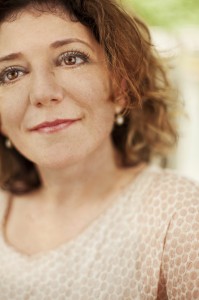
From Louisville. Live in Atlanta. Curious by nature. Researcher by education. Writer by practice. Grateful heart by desire.
Buy the Book!

The Stage Is On Fire, a memoir about hope and change, reasons for voyaging, and dreams burning down can be purchased on Amazon.