[The Stage is on Fire] is a page-turner in which, much like life, there are no easy answers and yet each step of the journey yields insight and hope. This work of heart must not be missed!
Melanie Faith
Creative Writing Teacher, Essayist & Poet.
Katie Steedly’s first-person piece [The Unspeakable Gift] is a riveting retelling of her participation in a National Institutes of Health study that aided her quest to come to grips with her life of living with a rare genetic disorder. Her writing is superb.
The Society of Professional Journalists
In recognition of receiving the Dateline Award for the Washingtonian Magazine essay, The Unspeakable Gift.
I thank you … It is the authenticity of your “class notes”; and it is the delicacy and skill with which you present the nuances of classroom life and the actuality of your students’ and fellow teachers’ lives.
Maxine Greene
Philosopher and Education Scholar
Enter your email here to receive Weekly Wide-Awake
back
Living the Comma #45
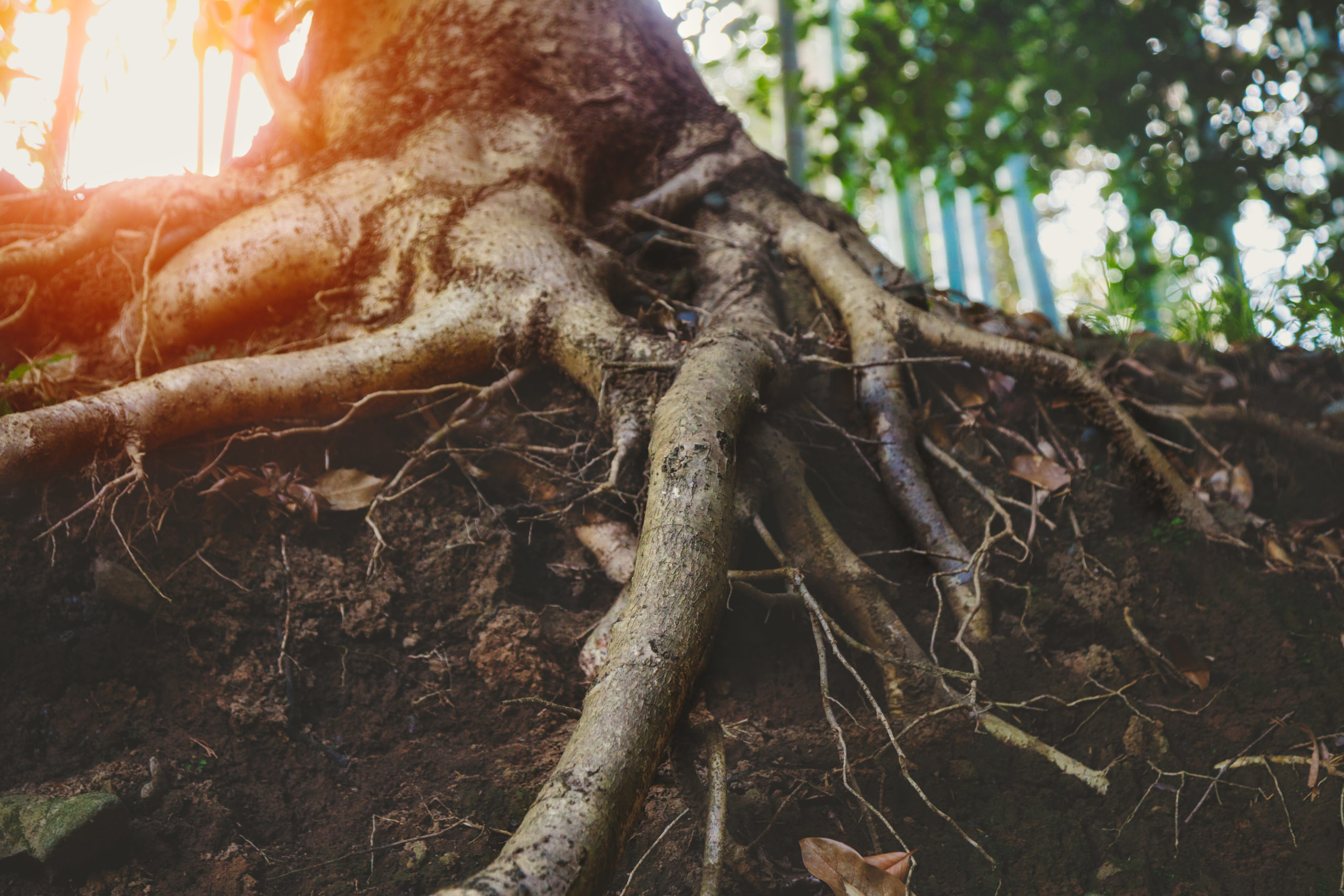
BEGINNING #2. Tree Roots. Cleaning Up.
Living the Comma
Living the Comma is a writers community seeking to connect people with a creative process, a writing practice, and a spiritual path.
We will have a theme that ties the weekly Living the Comma newsletter with monthly meetings. Each theme will be explored in each newsletter and meeting. A weekly writing activity will be drawn from the monthly theme. Weekly writing activities will/can be shared in comments section to each newsletter and in monthly meetings. My hope is that conversation develops around each writing exercise.
Living the Comma Dates and Themes: September 1 — Beginning. October 6 — Imagination. November 3 — Gratitude. December 1 — Joy. January 5 — Wintering. February 2 — Love. March 2 — Grace. April 6 — Breath. May 4 — Finishing.
Meetings occur at Virginia Highland Church from 7:00 to 8:30 EST. Join via our VIRTUAL MEETING LINK if you cannot be present in person.
The Living the Comma newsletter will be published every Sunday.
Split at the Root
I performed Adrienne Rich’s poem, “For the Record” in a theatre class in college. The poem is a statement on the atrocities of WWI. It ends in a statement:
“and ask whose signature/is stamped on the orders, traced/in the corner of the building plans/Ask where the illiterate, big-bellied/women were, the/drunks and crazies,/the ones you fear most of all: ask where you were.”
Ask Where You Were
As we look at beginnings — and beginning again and again — my desire to ask where am I, at this very moment, guided me to read Rich’s essay, “Split at the Root: An Essay on Jewish Identity.” This essay explores identity and consciousness, passing and self-hate, motherhood and feminism, gender and sexual orientation. She writes about being part of a cultural reckoning for genocide, war, and racial violence during the mid-20th century. There is a timeliness to those questions on the precipice of all that is.
A daughter of the South with a Gentile mother and Jewish father, Rich frames this essay as sense-making of her cultural roots. She describes feeling split at the root all her life.
“Sometimes I feel I have seen too long from too many disconnected angles: white, Jewish, anti-Semite, racist, anti-racist, once-married, lesbian, middle-class, feminist, exmatriate Southerner, split at the root: that I will never bring them whole. … Yet if we wait for the undamaged to make our connections for us; we can’t wait to speak until we are wholly clear and righteous. There is no purity, and, in our lifetimes, no end to this process.”
Living split at the root — between identities and truths, birth and death, illness and health, darkness and light, root and bud — is my rhythm. We are laid bare — our nerves and hearts exposed — right now. We are in our sanctuaries and courthouses and statehouses and streets. Who are we as individuals in community? Who are we as people accountable for the past, living in the present, building for future generations? How do we even begin to turn ourselves round right?
Beginning and Accountability
At the end of the essay, Rich explains:
“It’s a moving into accountability, enlarging the range of accountability. I know that in the rest of my life, the next half-century or so, every aspect of my identity will have to be engaged . . . The women trying, as part of her resistance, to clean up her act.”
Beginnings always begin. Ready or not. It feels honest and clear and right at this time of beginnings, when yesterday and today and tomorrow collide at a rapid pace and I can’t see through the smoke of the explosion to clean up my act. Becoming as whole as humanly possible and building a whole world is the point of cleaning up my act. Cleaning up my act — not in a judgmental-separate-harmful way, but rather a oneness-interconnected-powerful way — is the heart of resistance. We are all split at the root. Making sense of split identities. Asking ourselves about the as if, the I am, and the not yet. Rooting beginnings in the soil of past, present, and future.
Writing Exercise: Cleaning Up My Act
Step 1: Identify An Identity
Describe your individual journey? (Notice what details you include and what details you leave out.)
How do you introduce yourself? (Think about your response as if you are meeting an interested/ing stranger.)
What are your most important characteristics? (Include physical, social, emotional, spiritual, cognitive, and cultural characteristics.)
Respond to these questions, taking notes on the surprises, themes, realizations, joys, sorrows, hopes, aspirations, and other things that may bubble up.
Step 2: Explore A Divine Identity
Now, write about yourself as if you are divine. As if you are surrounded in strength and possibility, light and community, curiosity and courage, grace and hope. Write from an I am not yet perspective. Pay attention to sensory details — touch, taste, sight, smell, and sound. Take up as much space on the page as you need to conjure your magic.
Example: I am the river’s daughter. My river bed knows Ages. I live downstream from diagnosis and finitude, doubt and faith, mountain tops and deep ravines. I build with sweat and words. I melt when I am hot. I freeze when I am cold. I hear melodies in cat purrs and barges and cellos. I am elastic in the places that leave room for growth and learning. I am powerful in the places made of stars and scar tissue. I am whole like trees connecting through root systems.
Step 3: Write A Six-Word Memoir
Legend has it that Ernest Hemingway was once challenged to write a story in only six words. His response? “For sale: baby shoes, never worn.” In November 2006, Larry Smith, founder of what was then called SMITH Magazine, gave the six-word novel a personal twist by asking his community to describe their lives in exactly six words. He called these brief life stories Six-Word Memoirs. — Six-Word Memoirs
Examples: Broken miracle beautifully duct taped together./ Depth breath. Two steps. Deep breath./ Star dust. Scar tissue. Steel rims./ Brick by brick. Stone by stone./ Let the river carry you home./ Full-hearted pilgrim planting seeds and singing prayers./ Seeking grace. Sipping Saki. Crying to Carlile./ Green Ford. Blue Mazda. Gray Lexus./ Control freak pescatarian. Empathetic cheese lover./ Comforted by rainbows, butter, kaleidoscopes, seasons.
Step 4: Craft A Divine Memoir
Now, weave notes and divinity and memoir into fine cloth stitched of details, tenderness, and clarity.
Prompts to guide telling the story: The first/last time I felt whole […] — or — […] and […] and […] are central to my story — or — Roots are connected to wholeness by […] — or — What if split roots come together at he point of […] and […] and […] — or — Cleaning up my act means […] and […] and […] and […].
Feel free to use any or all of those prompts, or any other ones, to steer your Divine Memoir. Your Divine Memoir should be between 250 and 500 words.
Step 5: Reflection
Read your piece aloud when you are done. Let the story unfold. Allow your roots to dance and connect. Notice glimmers of golden wholeness. Find the new surprises and joys and identities you discovered as you wrote.
Polish between 250 and 500 words and share in the comments. You will be offered an opportunity to share during our face-to-face meeting, too.
From the heart of the comma,
Katie
Thanks for reading Living the Comma. Join our community to write and connect together.
About Katie
From Louisville. Live in Atlanta. Curious by nature. Researcher by education. Writer by practice. Grateful heart by desire.
Buy the Book!
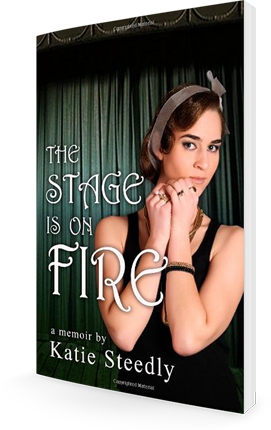
The Stage Is On Fire, a memoir about hope and change, reasons for voyaging, and dreams burning down can be purchased on Amazon.