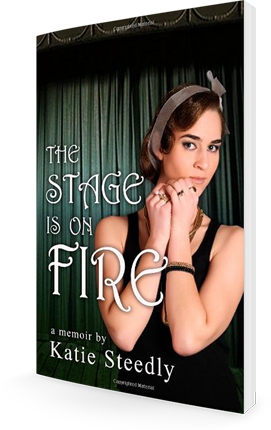
[The Stage is on Fire] is a page-turner in which, much like life, there are no easy answers and yet each step of the journey yields insight and hope. This work of heart must not be missed!
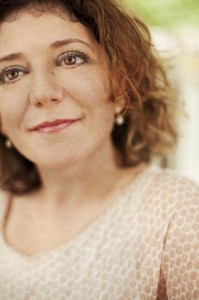
Katie Steedly’s first-person piece [The Unspeakable Gift] is a riveting retelling of her participation in a National Institutes of Health study that aided her quest to come to grips with her life of living with a rare genetic disorder. Her writing is superb.
In recognition of receiving the Dateline Award for the Washingtonian Magazine essay, The Unspeakable Gift.
I thank you … It is the authenticity of your “class notes”; and it is the delicacy and skill with which you present the nuances of classroom life and the actuality of your students’ and fellow teachers’ lives.
“Be patient toward all that is unsolved in your heart and try to love the questions themselves, like locked rooms and like books that are now written in a very foreign tongue. Do not now seek the answers, which cannot be given you because you would not be able to live them. And the point is, to live everything. Live the questions now. Perhaps you will then gradually, without noticing it, live along some distant day into the answer.”― Raíner María Rilke
I am not a patient person. I close my ears. I pound pavement. I clinch my fists. I hold my breath. I move too fast. Hustle is my rhythm. I live between focus and distraction. Presence and overwhelm. Peace and Anxiety. Loving the questions wears me out. Living everything is exhausting. Especially, right now. I want the answers, now.
Writing changes everything. I write because I genuinely, deep down, love the questions. I write to unlock rooms and learn foreign tongues. I write to shift and change and grow. I write to slow down. I write to notice. I write to live into the answers.
As we prepare to begin the second year of Living the Comma, I want us to consider the thought that living everything is the heart of a writing practice. Practicing the patience of falling in love (and staying in love) with words. Exploring the root systems of stories. Planting the seeds of thought and empathy. Excavating the unsolved like hidden gems.
A Living the Comma Writing Group Update
Conversations with Authors — Raíner María Rilke
Letters to A Young Poet — One
“You are looking outward, and that above all you should not do now. Nobody can advise or help you, nobody. There is only one single way. Go into yourself. Search for the reason that bids you write; find out whether it is spreading out its roots in the deepest places of your heart, acknowledge to yourself whether you would have to die if you were forbidden to write.” — Raíner María Rilke
Rilke’s Letter to a Young Poet — A Post by Austin Kleon
The letters aren’t really letters, they’re diaries. Rilke saw himself in Kappus, and so they’re written from Rilke to Rilke—both to his past and his present. They begin with a description of Rilke’s current setting (various cities across Europe) and continue into the subject of how to live and how to create. Each is a map of where he’s been and where he needs to go.
There’s so much to take away from the ten letters, but here’s a short-list of questions a young writer might ask, with Rilke’s responses. — Austin Kleon
Joanna Macy, In Memoriam: Beauty and Wisdom and Courage (and Rilke) to Sustain Us
If you have listened to On Being for any period of time, you have probably heard me invoke Rainer Maria Rilke. His works of prose and poetry are enduringly beloved — the Sonnets to Orpheus; the Duino Elegies; the Book of Hours. But none of his words have carried more persistently across time than his Letters to a Young Poet. It’s a small volume of ten letters Rilke wrote between 1903 and 1908 to a young military cadet and would-be poet, named Franz Kappus. Kappus reached out to Rilke, full of anguish about life, about love, about adulthood. But Rilke’s way of addressing these questions from an ordinary life touched on the enduring dramas of creating our lives — prophetic musings about solitude and relationship, humanity and the natural world, even gender and human wholeness.
And now, for us, there is a new translation. What a joy it is to delve into Rilke’s voice freshly rendered, with the translators, themselves prophetic humans: the wise psychologist and poet Anita Barrows and the incomparable Buddhist philosopher of ecology, Joanna Macy. — Krista Tippett
This week’s structured exercise plays with the concept of the question. Not only will you be guided to “live into the questions,” as Rilke suggests we do, but also to construct and use specific questions as portals to your most elusive material—the stories, essays, and poems that shy from you and hide in shadowed corners.
For this week’s exercise, you’ll begin by writing a list of questions. One way to approach this is to try to begin each question with a different questioning word. Also, be highly concrete, as if you are genuinely asking the question to someone real and specific, who could actually answer it. But also be open to fabulism and nonsense.
Here’s an example of such a list from Sing Me the Creation: How did you get here? Can you really trust snowmen? What color is Tuesday? Or should I take up midwifery instead? When did you realize the full horror of the situation? Where have you hidden my puncture outfit? Who are you anyway? Will you marry me? Have you ordered the deathbed? Which birthmark are you referring to? Why are you tearing up that bus ticket? Do my ears deceive me? Would you kindly restrain your mongoose? Shall I show you my X-rays before or after supper? Did moths make these star-shaped holes in my blanket?
***
After you’ve listed about ten or so very open ended, imagistic questions rich with imagination, go through your list and star two or three of your favorite questions—the ones that might lend themselves to further exploration, as with the tiny question-based essay on the nature of life by Piaget’s daughter. — Jeannine Ouellette, in Writing in the Dark
Please consider this a heartfelt invitation to join Living the Comma. It promises to be a creative space where we will write, read, and connect. It is a space for the dedicated writer and the writing-curious. It is a space for the published memoirist and the shower-tuned opera singer. It is a space for the true book believers and the library-resistant. It is a space to explore faith and desire and joy and hope and community and gratitude and creativity. Join us.