[The Stage is on Fire] is a page-turner in which, much like life, there are no easy answers and yet each step of the journey yields insight and hope. This work of heart must not be missed!
Melanie Faith
Creative Writing Teacher, Essayist & Poet.
Katie Steedly’s first-person piece [The Unspeakable Gift] is a riveting retelling of her participation in a National Institutes of Health study that aided her quest to come to grips with her life of living with a rare genetic disorder. Her writing is superb.
The Society of Professional Journalists
In recognition of receiving the Dateline Award for the Washingtonian Magazine essay, The Unspeakable Gift.
I thank you … It is the authenticity of your “class notes”; and it is the delicacy and skill with which you present the nuances of classroom life and the actuality of your students’ and fellow teachers’ lives.
Maxine Greene
Philosopher and Education Scholar
Enter your email here to receive Weekly Wide-Awake
back

Living the Comma #30
Graduation Season. Commencement. Famous Speeches.
I’d say, as a goal in life, you could do worse than: Try to be kinder. — George Saunders, Commencement Address, Syracuse University, 2013
Dear Writer Friends,
This is graduation season. A season of taking stock and saying thank you. A season of remembering those who have supported us and celebrating where we have been, are, and will be. A season of finishes and starts. A season big enough to include everyone — whether we are walking across a stage or not — in a collective past, present, and future.
I want to say a little bit about the word “commencement.” It sits in a liminal space between the I am and the Not yet. That is why it is so powerful. That is the big enoughness. Let me explain. Life is a series of beginnings and endings — of falling aparts and back togethers, if you will. A quick review of the etymology of commencement reveals when students finished their course of study and graduated, they celebrated their graduation by eating together —faculty, alumni, and graduates — at large common tables, called commensa in the Latin of the time. (Commensa becomes Commencement.) Graduation as a time for experts and newly-minted scholars, teachers and students, individuals and communities, and families and friends to come to the table together in acknowledgement and celebration makes sense. Commencement is a profound act of bounty and generosity and kindness under this lens.
As writer’s, we use words to mark time and construct narratives and leave a record. We use words to tell stories that capture lives and wisdom and worlds. We use words to communicate in ways that ancient cave writing foretold when symbols became words. We use words so that generation after generation can leave our world better than we found it.
In “This writer analyzed 100 graduation speeches — here are the 4 tips they all share,” Bruce Feiler looked across speeches for common nuggets of wisdom. The 4 tips Feiler found — 1. Dream Big. 2. Work Hard. 3. Make Mistakes. 4. Be Kind. Those tips make sense to me at every stage of life, across professional and personal contexts, and in the cracks and crevasses in which we determine how we live, where we focus our attention, what we build and create, and what does and does not matter.
As a writing exercise this week, you have been asked to write a speech. It can be a graduation speech, a eulogy, a toast, or an introduction — to name a few of the common speech-requiring assignments. Determine an occasion. Explain your relationship to the occasion. Describe your audience. (Either in writing or your mind’s eye.) Maybe you are writing the commencement address for the University that awarded you an honorary degree acknowledging your contribution to the world? Maybe you are introducing yourself to the Board of Directors at the world-saving non-profit you have been asked to lead? Maybe you are writing a blessing for your new grandchild’s christening? Maybe you are writing the Forward to the memoir you have on your heart? Be as creative and unbound as possible.
Famous Commencement Speeches —
Toni Morrison, Wellesley College, 2004 [Source —The Marginalian]
You are your own stories and therefore free to imagine and experience what it means to be human without wealth. What it feels like to be human without domination over others, without reckless arrogance, without fear of others unlike you, without rotating, rehearsing and reinventing the hatreds you learned in the sandbox. And although you don’t have complete control over the narrative (no author does, I can tell you), you could nevertheless create it.
Although you will never fully know or successfully manipulate the characters who surface or disrupt your plot, you can respect the ones who do by paying them close attention and doing them justice. The theme you choose may change or simply elude you, but being your own story means you can always choose the tone. It also means that you can invent the language to say who you are and what you mean. But then, I am a teller of stories and therefore an optimist, a believer in the ethical bend of the human heart, a believer in the mind’s disgust with fraud and its appetite for truth, a believer in the ferocity of beauty. So, from my point of view, which is that of a storyteller, I see your life as already artful, waiting, just waiting and ready for you to make it art.
Ann Patchett — Sarah Lawrence College, 2006 [Source —The Marginalian]
Time has a funny way of collapsing when you go back to a place you once loved. You find yourself thinking, I was kissed in that building, I climbed up that tree. This place hasn’t changed so terribly much, and so by an extension of logic I must not have changed much, either.
Coming back is the thing that enables you to see how all the dots in your life are connected, how one decision leads you to another, how one twist of fate, good or bad, brings you to a door that later takes you to another door, which aided by several detours — long hallways and unforeseen stairwells — eventually puts you in the place you are now. Every choice lays down a trail of bread crumbs, so that when you look behind you there appears to be a very clear path that points straight to the place where you now stand. But when you look ahead there isn’t a bread crumb in sight — there are just a few shrubs, a bunch of trees, a handful of skittish woodland creatures. You glance from left to right and find no indication of which way you’re supposed to go. And so you stand there, sniffing at the wind, looking for directional clues in the growth patterns of moss, and you think, What now?
George Saunders — Syracuse University, 2013 [Source —The Marginalian]
I’d say, as a goal in life, you could do worse than: Try to be kinder./ In seventh grade, this new kid joined our class. In the interest of confidentiality, her name will be “ELLEN.” ELLEN was small, shy. She wore these blue cat’s-eye glasses that, at the time, only old ladies wore. When nervous, which was pretty much always, she had a habit of taking a strand of hair into her mouth and chewing on it./ So she came to our school and our neighborhood, and was mostly ignored, occasionally teased (“Your hair taste good?” — that sort of thing). I could see this hurt her. I still remember the way she’d look after such an insult: eyes cast down, a little gut-kicked, as if, having just been reminded of her place in things, she was trying, as much as possible, to disappear. After awhile she’d drift away, hair-strand still in her mouth. At home, I imagined, after school, her mother would say, you know: “How was your day, sweetie?” and she’d say, “Oh, fine.” And her mother would say, “Making any friends?” and she’d go, “Sure, lots.”/ Sometimes I’d see her hanging around alone in her front yard, as if afraid to leave it./ And then — they moved. That was it. No tragedy, no big final hazing./ One day she was there, next day she wasn’t./ End of story./
Now, why do I regret that? Why, forty-two years later, am I still thinking about it? Relative to most of the other kids, I was actually pretty nice to her. I never said an unkind word to her. In fact, I sometimes even (mildly) defended her./ But still. It bothers me./ So here’s something I know to be true, although it’s a little corny, and I don’t quite know what to do with it:/ What I regret most in my life are failures of kindness./ Those moments when another human being was there, in front of me, suffering, and I responded … sensibly. Reservedly. Mildly./ Or, to look at it from the other end of the telescope: Who, in your life, do you remember most fondly, with the most undeniable feelings of warmth?/ Those who were kindest to you, I bet./ But kindness, it turns out, is hard — it starts out all rainbows and puppy dogs, and expands to include . . . well, everything.
Use graduation season to build the muscles and ligaments and tendons of humanity. Use graduation season to affirm our stories and history and better angels. Use graduation season to think of the healthy and just and loving world that is possible. Use graduation season to rekindle imagination and hope and faith.
From the heart of the comma,
Katie
Living the Comma #1
Living the Comma #2
Living the Comma #3
Living the Comma #4
Living the Comma #5
Living the Comma #6
Living the Comma #7
Living the Comma #8
Living the Comma #9
Living the Comma #10
Living the Comma #11
Living the Comma #12
Living the Comma #13
Living the Comma #14
Living the Comma #15
Living the Comma #16
Living the Comma #17
Living the Comma #18
Living the Comma #19
Living the Comma #20
Living the Comma #21
Living the Comma #22
Living the Comma #23
Living the Comma #24
Living the Comma #25
Living the Comma #26
Living the Comma #27
Living the Comma #28
Living the Comma #29
About Katie
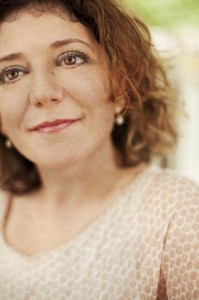
From Louisville. Live in Atlanta. Curious by nature. Researcher by education. Writer by practice. Grateful heart by desire.
Buy the Book!

The Stage Is On Fire, a memoir about hope and change, reasons for voyaging, and dreams burning down can be purchased on Amazon.