[The Stage is on Fire] is a page-turner in which, much like life, there are no easy answers and yet each step of the journey yields insight and hope. This work of heart must not be missed!
Melanie Faith
Creative Writing Teacher, Essayist & Poet.
Katie Steedly’s first-person piece [The Unspeakable Gift] is a riveting retelling of her participation in a National Institutes of Health study that aided her quest to come to grips with her life of living with a rare genetic disorder. Her writing is superb.
The Society of Professional Journalists
In recognition of receiving the Dateline Award for the Washingtonian Magazine essay, The Unspeakable Gift.
I thank you … It is the authenticity of your “class notes”; and it is the delicacy and skill with which you present the nuances of classroom life and the actuality of your students’ and fellow teachers’ lives.
Maxine Greene
Philosopher and Education Scholar
Enter your email here to receive Weekly Wide-Awake
back
La Guernica
Picasso was the first major painter I ever experienced. I first saw his work when I was sixteen and journeyed to my first major museum during my first trip outside of the United States. I traveled to Spain in 1987 to spend a summer in a Spanish language immersion program with a group from my high school. I had never had my mind blown by a work of visual art. I had been a singer and a dancer throughout my childhood, so that kind of pure rapture had previously been reserved for performing.
In Madrid, Picasso’s La Guernica was on display in an annex next to the Prado with a wall big enough to display the larger than life painting. La Guernica depicts the bombing of a public market in Guernica, Spain, on April 26, 1937 during the Spanish Civil War. The masterpiece portrays the horror of war in black and white. The cruelty of fascism. The dark side of humanity. The work is huge. I was not prepared for its scope or size, or for the fact it was behind glass being protected by armed guards. I was not used to armed guards. The image floored me.
A woman was filming a video in front of the image. She was singing in French. I don’t remember the vibe of the song. I think I was just too overwhelmed by the entire experience to truly pay attention to anything but The Guernica. Her presence, and the presence of the crew filming her, forced me to initially look from a distance. I stood there and my eyes were immediately drawn to the tragic face of a mother mourning her dead child, the rage of a bull destroying everything in its path, and the horror of the light exploding with force of a powerful bomb.
When the singer left the space, I walked closer to the glass and velvet rope rail. Drawn by the grief of the image, I moved from left to right, slowly reading the story of that tragic afternoon told by disfigured mouths from destroyed faces, transported not by a literal representation of war, but invited to a communal experience. It was like I was reading a novel. The bull charges while the masses cry out in terror. Picasso begs us to see the cost of war. For the armor that surrounds our hearts to break. For our eyes to flood with the tears of those who have lost children. For our minds to envision a world without war. I was right there. Present.
I think about La Guernica when I think about cruelty and war. We have become anesthetized. Our hearts and imaginations struggle to see a world beyond bombs and active shooter drills. Thee voices of our leaders fail to demand peace. There is a lesson to be learned from La Guernica for these times. When violence falls from the sky. When violences shoots from guns. When violence reigns down from drones. When the powerful prey upon the powerless. When the world must defeat cruelty and greed with big love that can not be contained.
About Katie
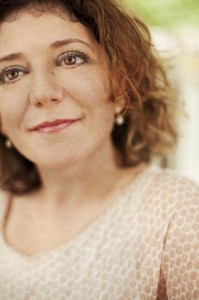
From Louisville. Live in Atlanta. Curious by nature. Researcher by education. Writer by practice. Grateful heart by desire.
Buy the Book!
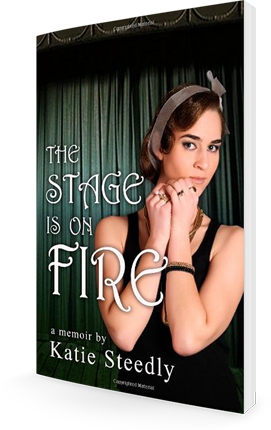
The Stage Is On Fire, a memoir about hope and change, reasons for voyaging, and dreams burning down can be purchased on Amazon.