[The Stage is on Fire] is a page-turner in which, much like life, there are no easy answers and yet each step of the journey yields insight and hope. This work of heart must not be missed!
Melanie Faith
Creative Writing Teacher, Essayist & Poet.
Katie Steedly’s first-person piece [The Unspeakable Gift] is a riveting retelling of her participation in a National Institutes of Health study that aided her quest to come to grips with her life of living with a rare genetic disorder. Her writing is superb.
The Society of Professional Journalists
In recognition of receiving the Dateline Award for the Washingtonian Magazine essay, The Unspeakable Gift.
I thank you … It is the authenticity of your “class notes”; and it is the delicacy and skill with which you present the nuances of classroom life and the actuality of your students’ and fellow teachers’ lives.
Maxine Greene
Philosopher and Education Scholar
Enter your email here to receive Weekly Wide-Awake
back

Living the Comma #47
BEGINNING #4. Voter Guide. Inaugural Poetry. Tragic Optimism. A Poetics of Growth.
Living the Comma
Living the Comma is a writers community connecting people with a creative process, a writing practice, and a spiritual path.
We have a theme that ties the weekly Living the Comma newsletter with monthly meetings. Each theme will be explored in each newsletter and meeting. A weekly writing activity will be drawn from the monthly theme. Weekly writing activities responses can be shared in comments section to each newsletter and in monthly meetings. My hope is that conversation develops around each writing exercise.
Living the Comma Dates and Themes: September — Beginning. October — Imagination. November — Gratitude. December — Joy. January — Wintering. February — Love. March — Grace. April — Breath. May — Finishing.
Meetings occur at Virginia Highland Church from 7:00 to 8:30 EST. Join via our VIRTUAL MEETING LINK if you cannot be present in person.
OUR NEXT FACE-TO-FACE MEETING — OCTOBER 13, 2026
The Living the Comma newsletter is published every week.
Beginnings and a Voter Guide
I have been knee deep writing a voter guide for the upcoming November 3 election. Writing a voter guide is not for the faint of heart. Listening to interviews and debates. Scouring candidate websites and voting records. Reviewing voter guides and candidate biographies.
I have been ten toes down in the beginnings promised by elections. I have been studying the structure of hope and agency and freedom that elections provide. I have been breathing in the possibility and imagination and power of a vote. I have been planting the seeds of participation and connection and community.
Elections are beginnings. Like all beginnings, elections ask us to imagine and build and create. Like all beginnings, elections move like tides and electricity and mornings. Like all beginnings, elections breathe progress and clarity and change.
Inaugural Poetry
When day comes we ask ourselves, where can we find light in this never – ending shade? The loss we carry, a sea we must wade. We’ve braved the belly of the beast, we’ve learned that quiet isn’t always peace and the norms and notions of what just is, isn’t always justice. And yet the dawn is ours before we knew it, somehow we do it, somehow we’ve weathered and witnessed a nation that isn’t broken but simply unfinished. — From “The Hill We Climb,” by Amanda Gorman, read at President Joe Biden’s Inauguration
Inaugurations mark beginnings. Inaugural poetry marks important beginnings. I have always been interested in inaugural poetry. My soul soared as Maya Angelou spoke of rocks and rivers and trees in “On the Pulse of Morning.” A few years ago — after the 2024 United States Presidential election — I gathered inaugural poems as a balm for my wounds, a reminder of hopeful times. Reading them together, saying them out load, considering them as we think about beginnings fits this moment. Inaugural poems are part constellation and part constitution. Part prayer and part song. Part map and part desire path.
The Case for Tragic Optimism
I want to suggest beginnings — framed in inaugural poetry — make a case for tragic optimism. Tragic optimism is described in Victor Frankl’s Man’s Search for Meaning, “In brief it means that one is, and remains, optimistic in spite of the ‘tragic triad,’ … a triad which consists of those aspects of human existence which may be circumscribed by: (1) pain; 2) guilt; and (3) death.”
According to Frankl, maintaining optimism in times of pain, guilt, and death is central to finding life’s meaning. Frankl explains,
there are three main avenues on which one arrives at meaning in life. The first is by creating a work or by doing a deed. The second is by experiencing something or encountering someone; in other words, meaning can be found not only in work but also in love. … Most important, however, is the third avenue to meaning in life: even the helpless victim of a hopeless situation, facing a fate he cannot change, may rise above himself, may grow beyond himself, and by so doing change himself. He may turn a personal tragedy into a triumph.
Tragic optimism makes sense. Action and work makes sense. Service and love makes sense. Turning tragedy into triumph makes sense. The courage and capacity and intention to begin and persist and thrive is built on tragic optimism. Tragic optimism swims at the depth of human experience where true happiness and peace are found.
Connecting a search for meaning with beginnings makes sense to me, too. Meaning falls apart and back together, apart and back together, apart and back together. Meaning begins and ends, begins and ends, begins and ends. Meaning contracts and expands, contracts and expands. The elastic nature of meaning is comforting. There is a flow to meaning that looks like time and age and wisdom.
A Poetics of Growth
“To grow is to change and to be perfect is to have changed often.” — John Henry Newman
In “Work As A Poetics of Growth,”in Anam Cara: A Book of Celtic Wisdom, John O’Donohue, describes a poetics of growth. Beginnings are a poetics of growth.
O’Donohue explains,
There is a beautiful complexity of growth within the human soul. In order to glimpse this, it is helpful to visualize the mind as a tower of windows. Sadly, many people remain trapped at the one window, looking out every day at the same scene in the same way. Real growth is experienced when you draw back from that one window, turn, and walk around the inner tower of the soul and see all the different windows that await your gaze. Through these different windows, you can see new vistas of possibility, presence, and creativity.
When I think about a mind as a tower with vistas of possibility, presence, and creativity, I picture a staircase of success and failure, milestones and minutia, mountaintops and riverbeds. I soften to the idea that growth is about backward and forward and up and down. I hear the truth that whispers gently, “I am not yet.”
“The Deer’s Cry”
— Ancient Celtic Poem, translated by Kuno Meyer
I arise today
Through God’s strength to direct me,
God’s might to uphold me,
God’s wisdom to guide me,
God’s eye to look before,
God’s ear to hear me,
God’s word to speak to me,
God’s hand to guard me,
God’s way to lie before me,
God’s shield to protect me.
God’s hosts to save me from snares of devils
From temptation of vices,
From everyone who shall wish me ill,
Afar and anear,
Alone and in a multitude.
O’Donohue asserts, “Celtic spirituality has a great sense of the significance of each day, how the new day is sacred.” A new day is a perpetual morning. It is a chance to seek the holy, to be still and know, to act and serve and connect. In this way, every morning is a sacred beginning.
Writing Exercise — Inauguration Day
Living the Comma Writing Exercises are inspired by the Beyond with Jane Ratcliff, The Isolation Journals with Suleika Jaouad, Letters From Love with Elizabeth Gilbert, the Mondays are Free writing project by Ross Gay and Patrick Rosal, The Clearing by Katherine May, and Writing in the Dark with Jeannine Ouelette communities.
Step 1: Inaugural Poetics
Take a/another look at the 7 inaugural poems included this newsletter. Maybe read them aloud as they were meant to be read. Consider the breadth of approaches to the work taken by the selected poets. Choose a favorite line from each of the poems. Think about tragic optimism and meaning. Think about growth and morning. Think about hope and beginnings. Select one line from each poem.
Step 2: Write an Inaugural Montage
Create an Inaugural Montage from the lines you selected. They need not be in any specific order. Let your heart and eyes and ears determine the order. Make sure each of the 7 lines are included in the montage.
Step 3: Rearrange an Inaugural Montage
Read your Inaugural Montage out load. Take a deep breath. Completely rearrange it. Place the lines in a completely different order. What catches your attention? Do themes emerge? What does the montage say about beginnings?
Step 4: Write 5 Lines
Take a look at your rearranged montage. Select 5 of your favorite words from the text and write a line about each word. It is not important if the lines flow together. It is not important that the lines make sense. It is not important that you see where they will eventually fit.
Step 5: Insert 5 Lines Into A Rearranged Inaugural Montage
Take your rearranged 7 line inaugural montage and place the 5 lines you have written inside the text. Allow the movement from the inaugural poems into the lines you have written to emerge. Release a right or wrong impulse. Think about tragic optimism and meaning. Think about growth and morning. Think about hope and beginnings. Let a new story be told.
Step 6: Craft Your Inaugural Poem
Read your new text aloud. Think about tragic optimism and meaning. Think about growth and morning. Think about hope and beginnings. Take the text you have created — the complete Inaugural Montage — and consider context. Picture delivering your Inaugural Poem at an important event – a ribbon cutting, a ground breaking, maybe even the next Presidential Inauguration in which you have been invited to participate.
Now, back to completing the voter guide. My prayer is that the upcoming election be a beginning. A beginning built on truth and kindness. A beginning that welcomes justice and peace. A beginning creating hope and faith.
From the heart of the comma,
Katie
Thanks for Living the Comma with me. Subscribe to participate and connect with our community.
Living the Comma #44
Living the Comma #45
Living the Comma #46
About Katie
From Louisville. Live in Atlanta. Curious by nature. Researcher by education. Writer by practice. Grateful heart by desire.
Buy the Book!
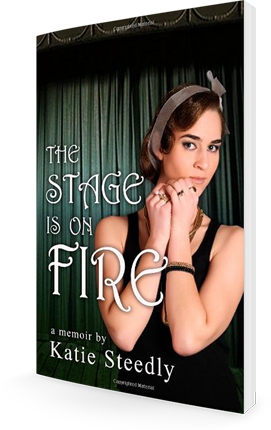
The Stage Is On Fire, a memoir about hope and change, reasons for voyaging, and dreams burning down can be purchased on Amazon.