[The Stage is on Fire] is a page-turner in which, much like life, there are no easy answers and yet each step of the journey yields insight and hope. This work of heart must not be missed!
Melanie Faith
Creative Writing Teacher, Essayist & Poet.
Katie Steedly’s first-person piece [The Unspeakable Gift] is a riveting retelling of her participation in a National Institutes of Health study that aided her quest to come to grips with her life of living with a rare genetic disorder. Her writing is superb.
The Society of Professional Journalists
In recognition of receiving the Dateline Award for the Washingtonian Magazine essay, The Unspeakable Gift.
I thank you … It is the authenticity of your “class notes”; and it is the delicacy and skill with which you present the nuances of classroom life and the actuality of your students’ and fellow teachers’ lives.
Maxine Greene
Philosopher and Education Scholar
Enter your email here to receive Weekly Wide-Awake
back
Living the Comma #46
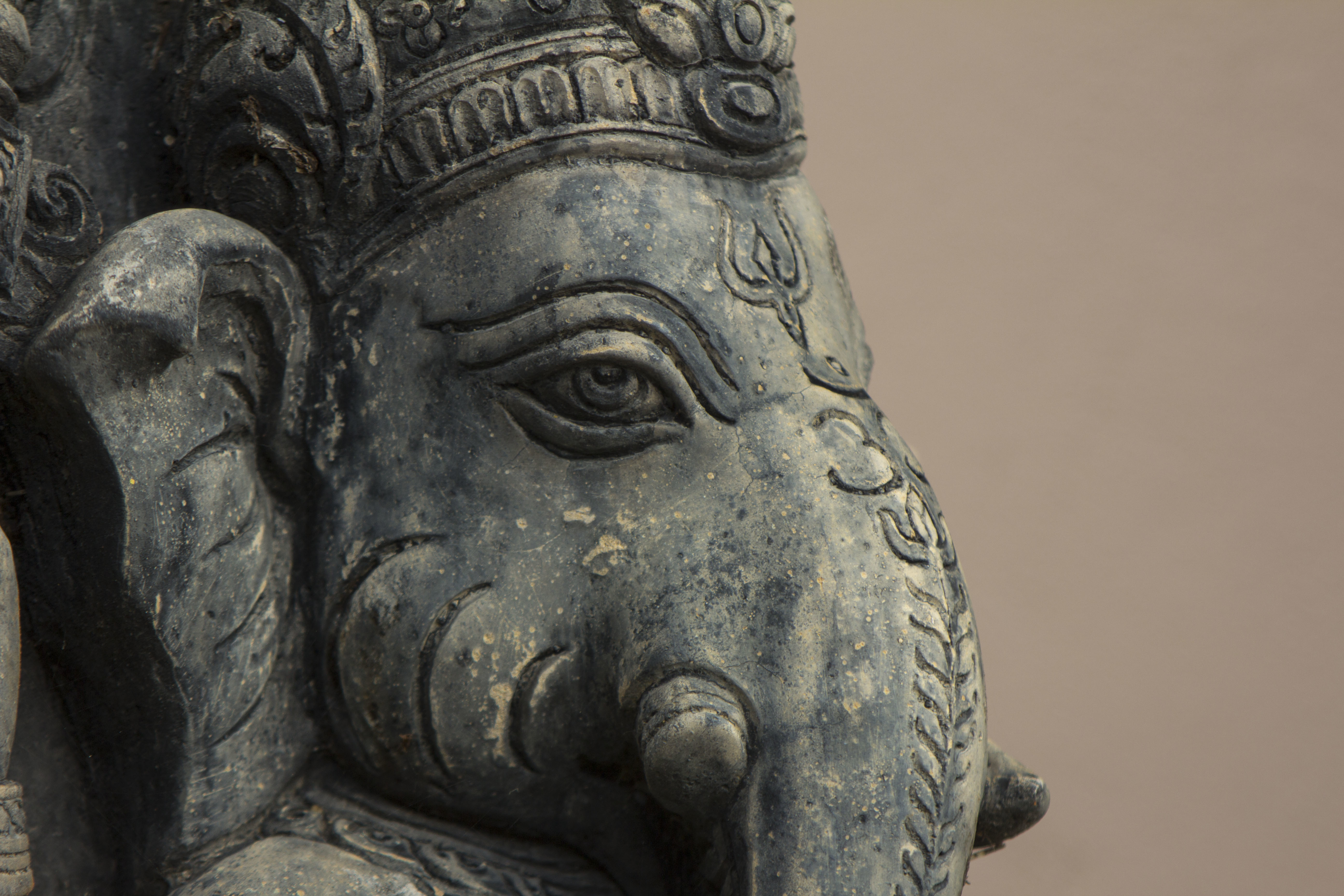
BEGINNING #3. Good Stories. Ganesha. Beginning Songs.
Then what in your opinion is a good story? ‘What it’s always been, monkey,’ Ganesha said. ‘One dhansu conflict. Some chaka-chak song and dance. Grief. Love. Love for the lover, love for the mother. Love for the land. Comedy. Terror. One tremendous villain whom we must love also. All the elements properly balanced and mixed together, item after item, like a perfect meal with a dance of tastes. There you have it. ― Vikram Chandra
We celebrate our wedding anniversary around the edges of a Harvest Moon and the Festival of Ganesha. Our life together has been a good story — elements properly balanced and mixed together, a perfect meal with a dance of tastes. Our marriage has been both mirror and soil. Shadow and daylight. Falling apart and back together. I suppose all intimate relationships are all that. I suppose all intimate relationships are made of people who are all not yet, the challenge becomes being not yet together. Being not yet together is a balance of curiosity, compassion, humor, mixed with grace, honesty, and love. Being not yet together is a good story.
Living the Comma
Living the Comma is a writers community connecting people with a creative process, a writing practice, and a spiritual path.
We have a theme that ties the weekly Living the Comma newsletter with monthly meetings. Each theme will be explored in each newsletter and meeting. A weekly writing activity will be drawn from the monthly theme. Weekly writing activities responses can be shared in comments section to each newsletter and in monthly meetings. My hope is that conversation develops around each writing exercise.
Living the Comma Dates and Themes: September 1 — Beginning. October 6 — Imagination. November 3 — Gratitude. December 1 — Joy. January 5 — Wintering. February 2 — Love. March 2 — Grace. April 6 — Breath. May 4 — Finishing.
Meetings occur at Virginia Highland Church from 7:00 to 8:30 EST. Join via our VIRTUAL MEETING LINK if you cannot be present in person.
The Living the Comma newsletter is published every Sunday.
During 2013, Katie and Greg had the good fortune to travel to South Asia. In March, Katie visited Bali and in July and August, Greg visited India. On those trips, they each learned of the Hindu God Ganesha, who is believed to remove obstacles from our spiritual paths and protect the important beginnings of our lives. The couple met one month after Greg’s return, during the Festival of Ganesha, the largest Hindu festival in India. Today, September 19th, 2015, falls during the Festival of Ganesha. On this day of beginnings, may he bless the union of Katie and Greg. Om shanti. Om shanti. Om shanti. Om. — Text From Our Wedding Program
The Root of the Root and the Bud of the Bud
The root and the bud has framed our entire marriage. Let me explain. The E.E. Cummings poem “[I carry your heart with me(I carry it in]” was read during our wedding ceremony. Amidst flowers, Chantilly lace, organ music, a sand ceremony, an exchange of rings, family, and friends, a dear friend read the words. Cards and letters share root and bud moments. We notice roots and buds day-by-day, breath by breath. The beauty of roots and buds, the experience of depth and height, The taste of bitter and sweet, the sight of light and dark, the rhythm of beginning and ending that has been our way.
[i carry your heart with me(i carry it in]
by E.E. Cummings
i carry your heart with me(i carry it in
my heart)i am never without it(anywhere
i go you go,my dear;and whatever is done
by only me is your doing,my darling)
i fear
no fate(for you are my fate,my sweet)i want
no world(for beautiful you are my world,my true)
and it’s you are whatever a moon has always meant
and whatever a sun will always sing is you
here is the deepest secret nobody knows
(here is the root of the root and the bud of the bud
and the sky of the sky of a tree called life;which grows
higher than soul can hope or mind can hide)
and this is the wonder that’s keeping the stars apart
i carry your heart(i carry it in my heart)
New Beginnings
In “Lazy Days and New Beginnings,” from The Joy of Full Consciousness, Thich Nhat Hanh describes the Buddhist practice of Beginning Anew. Hanh explains,
“The full moon and the new moon are also important rhythms of Plum Village. On these days, twice a month, the residents in each of the three monasteries gather round their abbot or abbess for the observance of Beginning Anew. This is an especially important moment for interpersonal relationships. It is a time for members of the community to freely and publicly express their appreciation for and to each other. It is also a time for honest examination of one’s conscience regarding relations with others.”
A video produced by Plum Village describes the process of Beginning Anew as a mindful path to peace. It can also be understood as a framework for a conversation. There are 4 Steps —”ways of being” — in Beginning Anew. The first step is Watering the Flowers — sharing the good qualities of the person with whom you are talking with that person. The second step is Expressing Regret — identifying your role in the situation being discussed. The third step is Expressing Suffering — allowing others into your pain, creating vulnerability and understanding. The fourth step is Asking for Help— inviting others into the healing process.
Fresh Starts
We are all children of the Great Spirit, we all belong to Mother Earth. Our planet is in great trouble and if we keep carrying old grudges and do not work together, we will all die. — Chief Seattle
In the essay, “Fresh Start” in The Places That Scare You, Pema Chödrön writes about forgiveness. She offers that forgiveness of ourselves and others can be a fresh start. Forgiveness can be fresh start to a life beyond pain, guilt, and regret. Forgiveness can be a fresh start to a life of clarity, wholeness, and center. Forgiveness can be a fresh start to a life where we can breathe in love and breathe out peace.
Writing Exercise — A Beginning Song
Living the Comma Writing Exercises are inspired by the Beyond with Jane Ratcliff, The Isolation Journals with Suleika Jaouad. Letters From Love with Elizabeth Gilbert Letters From Love with Elizabeth Gilbert, the Mondays are Free writing project by Ross Gay and Patrick Rosal, The Clearing by Katherine May, and Writing in the Dark with Jeannine Ouelettecommunities.
Step 1: What we carry as we begin — An Inventory
Cummings exclaims he carries his love’s heart in his heart. Life’s meaning is known in love. Make a list of things you love. A love can be anything. Let your mind wander through the new and the old, the big and the small, the straight and the curvy, the wide and the narrow, the exotic and the plain, the joyous and the heart wrenching, the closed and the open.
Take your inventory noting the surprises, themes, realizations, aspirations, longings, desires, dreams, and fears.
Step 2: Explore the practice of Beginning Anew
Write a letter to someone following the Beginning Anew path. First, Water the Flowers— share the good qualities of the person to whom you are writing. Second, Express Regret — identify your role in the situation being discussed. Third, Express Suffering — allow others into your pain. Fourth, Asking for Help — invite the other person into the healing process.
Step 3: Write a Forgiveness Song/Poem
Listen to Meditation on Breathing by Sarah Dan Jones. The lyrics of the song’s chorus — “When I breathe in, I’ll breathe in peace. When I breathe out, I’ll breathe out love.” Write about a moment when you have been forgiven or forgave someone. Write about the details of the situation. Write about the emotions surrounding the situation. Listen to Meditations on Breathing, again. Feel the rhythm of the song. Now, write a Forgiveness Song/Poem.
Step 4: Write a Beginning Song/Poem
Now, weave the inventory, letter, and lyrics into a new song/poem. The Beginning Song/Poem should be between 10 to 20 lines and between 250 and 500 words.
Step 5: Reflect on your Beginning Song/Poem
Sing/read your Beginning Song aloud. Breathe in peace. Breathe out love. Again and again and again. Notice where forgiveness enters your experience. In what ways are forgiveness and beginning connected?
Step 6: Craft your Beginning Song/Poem
Polish a Beginning Song/Poem of between 250 and 500 words. Share in the comments. You will be offered an opportunity to share your Beginning Song/Poem during our face-to-face meeting, too.
This week, think about roots and buds. Think about Beginning Anew. Think about forgiveness and Fresh Starts. Be kind to yourself and others. Be awake to what stirs in the pursuit of beginning. Be soft and open as you begin.
From the heart of the comma,
Katie
Thanks for Living the Comma with me. Subscribe to participate and connect with our community.
Living the Comma #44
Living the Comma #45
About Katie

From Louisville. Live in Atlanta. Curious by nature. Researcher by education. Writer by practice. Grateful heart by desire.
Buy the Book!

The Stage Is On Fire, a memoir about hope and change, reasons for voyaging, and dreams burning down can be purchased on Amazon.