[The Stage is on Fire] is a page-turner in which, much like life, there are no easy answers and yet each step of the journey yields insight and hope. This work of heart must not be missed!
Melanie Faith
Creative Writing Teacher, Essayist & Poet.
Katie Steedly’s first-person piece [The Unspeakable Gift] is a riveting retelling of her participation in a National Institutes of Health study that aided her quest to come to grips with her life of living with a rare genetic disorder. Her writing is superb.
The Society of Professional Journalists
In recognition of receiving the Dateline Award for the Washingtonian Magazine essay, The Unspeakable Gift.
I thank you … It is the authenticity of your “class notes”; and it is the delicacy and skill with which you present the nuances of classroom life and the actuality of your students’ and fellow teachers’ lives.
Maxine Greene
Philosopher and Education Scholar
Enter your email here to receive Weekly Wide-Awake
back

Weekly Wide-Awake #44
Bell Hooks. Bad Bunny. Bad Poetry. Love.
“If love is really the active practice—Buddhist, Christian, or Islamic mysticism—it requires the notion of being a lover, of being in love with the universe … To commit to love is fundamentally to commit to a life beyond dualism. That’s why love is so sacred in a culture of domination because it simply begins to erode your dualisms: dualisms of black and white, male and female, right and wrong.” — Bell Hooks
The work of Bell Hooks helps me understand love. Hooks is described as an academic, social critic, feminist, activist, and author. I have devoured the books she has written about love over the years. I have been wading in the waters of all her work for a long time. Hooks thoughts on love help me understand the concept.
Living the Comma #16
Meteors. Bad Bunny. Love. Bell Hooks.
I want to live the rest of my life, however long or short, with as much sweetness as I can decently manage, loving all the people I love, and doing as much as I can of the work I still have to do. I am going to write fire until it comes out of my ears, my eyes, my nose holes — everywhere. Until it’s every breath I breathe. I am going to go out like a fucking meteor! — Audrey Lorde
Hello Writer Friends,
I came across this quote last week and it stopped me in my tracks. It got me thinking about what it means to write with fire, and why finding our fire — whatever that fire is — is exactly what we are meant to do right now. Bad Bunny’s Super Bowl halftime show was fire and love. “The only thing more powerful than hate is love.” It was a meteor!
MONDAYS ARE FREE EXERCISES 176 – 180
EXERCISE 176: WELCOME BACK
into your life
In what is probably a kissing cousin to the Thomas Lux prompt (Exercise 009: Giving Back), write a poem that welcomes back everything you’ve dismissed or forgotten or refused or rebuked or hidden from or been indifferent to, and which you would now like to bring back into your life. You might call it “Welcome Back,” and in that way be invoking the hit 70s TV show Welcome Back, Kotter. But you might call it other things too!
Welcome Back, a full night’s sleep. Welcome Back, sunshine on my face. Welcome Back, grass in my toes. Welcome Back, yoga every morning. Welcome back, consistent journaling. Welcome Back, magnolias. Welcome back, peach trees in Piedmont Park. Welcome Back, mouth watering sushi. Welcome Back, ankles that do not tire easily. Welcome Back, a lower back that does hurt. Welcome Back, eyes that don’t need readers. Welcome Back, a body that does not need numerous prescriptions. Welcome Back, an overwhelming feeling of comfort when approaching difficult conversations. Welcome Back, cooking skills. Welcome Back, knowing how to breathe when my blood boils. Welcome Back, Marcona almonds. Welcome Back, brie cheese. Welcome Back, black out curtains in our bedroom. Welcome Back, ice cream. Welcome Back, travel to beautiful and interesting places. Welcome Back, reading the best books by my favorite authors. Welcome back, conversations with my favorite people.
Spit and Spaghetti #10
Pitches from Wind and Wall
O’Brien Fellowship for Public Service Journalism
This project will define convict leasing, explore the struggle to end the practice, and discuss its relationship to current public funding of private prisons — which includes significant investments in prison labor. I currently live across the street from a historically designated renovated brick factory in Atlanta. The original owner of the brick factory, B. Mifflin Hood, led the fight against convict leasing in Georgia in the second half of the 1900th and early 2000th century. Talking with Douglas Blackmon, author of the Pulitzer Prize Winning Slavery by Another Name and current faculty at Georgia State University, piqued my interest in connecting history and our current situation. My personal connection to the story also stems from teaching a writing class for several years in a federal prison in South Florida. Teaching that class gave me a front row seat to our common humanity, a fact which is commonly ignored and/or weaponized when talking about incarcerated individuals.
Weekly Wide-Awake #1
Weekly Wide-Awake #2
Weekly Wide-Awake #3
Weekly Wide-Awake #4
Weekly Wide-Awake #5
Weekly Wide-Awake #6
Weekly Wide-Awake #7
Weekly Wide-Awake #8
Weekly Wide-Awake #9
Weekly Wide-Awake #10
Weekly Wide-Awake #11
Weekly Wide-Awake #12
Weekly Wide-Awake #13
Weekly Wide-Awake #14
Weekly Wide-Awake #15
Weekly Wide-Awake #16
Weekly Wide-Awake #17
Weekly Wide-Awake #18
Weekly Wide-Awake #19
Weekly Wide-Awake #20
Weekly Wide-Awake #21
Weekly Wide-Awake #22
Weekly Wide-Awake #23
Weekly Wide-Awake #24
Weekly Wide-Awake #25
Weekly Wide-Awake #26
Weekly Wide-Awake #27
Weekly Wide-Awake #28
Weekly Wide-Awake #29
Weekly Wide-Awake #30
Weekly Wide-Awake #31
Weekly Wide-Awake #32
Weekly Wide-Awake #33
Weekly Wide-Awake #34
Weekly Wide-Awake #35
Weekly Wide-Awake #36
Weekly Wide-Awake #37
Weekly Wide-Awake #38
Weekly Wide-Awake #39
Weekly Wide-Awake #40
Weekly Wide-Awake #41
Weekly Wide-Awake #42
Weekly Wide-Awake #43
About Katie

From Louisville. Live in Atlanta. Curious by nature. Researcher by education. Writer by practice. Grateful heart by desire.
Buy the Book!
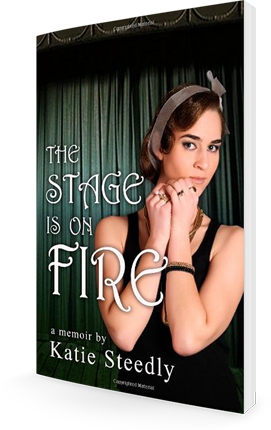
The Stage Is On Fire, a memoir about hope and change, reasons for voyaging, and dreams burning down can be purchased on Amazon.