[The Stage is on Fire] is a page-turner in which, much like life, there are no easy answers and yet each step of the journey yields insight and hope. This work of heart must not be missed!
Melanie Faith
Creative Writing Teacher, Essayist & Poet.
Katie Steedly’s first-person piece [The Unspeakable Gift] is a riveting retelling of her participation in a National Institutes of Health study that aided her quest to come to grips with her life of living with a rare genetic disorder. Her writing is superb.
The Society of Professional Journalists
In recognition of receiving the Dateline Award for the Washingtonian Magazine essay, The Unspeakable Gift.
I thank you … It is the authenticity of your “class notes”; and it is the delicacy and skill with which you present the nuances of classroom life and the actuality of your students’ and fellow teachers’ lives.
Maxine Greene
Philosopher and Education Scholar
Enter your email here to receive Weekly Wide-Awake
back

Taking A Walk #25
Taking A Walk with Oliver Sacks
Mercury
[At eighty] “One has seen triumphs and tragedies, booms and busts, revolutions and wars, great achievements and deep ambiguities. One has seen grand theories rise, only to be toppled by stubborn facts. One is more conscious of transience and, perhaps, of beauty. At eighty, one can take a long view and have a vivid, lived sense of history not possible at an earlier age. I can imagine, feel in my bones, what a century is like, which I could not do when I was forty or sixty.”
– Oliver Sacks
I have been searching for the long view lately. I re-read Oliver Sacks collection of essays, Gratitude. He wrote the first essay, entitled, “Mercury,” on the occasion of his eightieth birthday. Sacks, a lauded scientist and author, writes a list of things he wished he had accomplished during his eighty years of life. He recalls his patients who reflect that they have lived a complete life and are ready to pass. He questions the concepts of postmortem existence and a “complete” life. He offers the hope that he will love and work (“the two most important things, Freud insisted, in life”) for a few more years.
My Own Life
Over the last few days, I have been able to see my life as from a great altitude, as a sort of landscape, and with a deepening connection of all its parts. This does not mean I am finished with life. On the contrary, I feel intensely alive, and I want to hope in the time that remains to deepen my friendships, to say farewell to those I love, to write more, to travel if I have the strength, to achieve new levels of understanding and insight.
This will involve audacity, clarity, and plain speaking; trying to straighten my accounts with the world. But there will be time, too, for some fun (and even some silliness, as well).
Oliver Sacks
“My Own Life,” the second essay in Oliver Sacks’ Gratitude, chronicles his thoughts on having terminal cancer. This essay presents how he will spend his last time on earth. I am drawn to it right now as an exercise in deep understanding, in holding both sorrow and joy, in separating wheat from chaff, in treasuring what matters and setting other things free. Sacks speaks of audacity, clarity, and plain speaking — the straightening of accounts. Strengthening of accounts is important whenever we set them. As we wake up in the morning. As we go to sleep at night. After we receive a diagnosis of terminal illness. During a pandemic. When we give birth. At decision points in our lives. At all our beginnings and our endings.
Sacks writes about the value of love and work. He boils it all down to love and work. That makes sense to me. Within love and work, our dreams are manifest. Within love and work, there is room for joy. Within love and work, life whispers and we listen. Within love and work, our accounts are straight.
My Periodic Table
“And now, at this juncture, when death is no longer an abstract concept, but a presence – an all-to-close, not-to-be-denied presence, I am again surrounding myself, as I did when I was a boy with metals and minerals, little emblems of eternity.”
Oliver Sacks
“My Periodic Table,” the third essay in Oliver Sacks, Gratitude, pays homage to his connection to the natural world. From a star-filled night sky, to lemurs hanging from trees, to musings about scientific discoveries, Sacks celebrates the natural world down to its very elemental essence. He names every birthday in honor of the element corresponding to the year and beautifully describes the lead (82 years old – the last birthday he has celebrated) and bismuth (83 years old – the birthday he will not see). With life’s light preparing to go out, Sacks reminds us to slow down and look inside.
Sabbath
“And now, weak, short of breath, my once-firm muscles melted away by cancer, I find my thoughts, increasingly, not on the super natural or spiritual but on what is meant by living a good and worthwhile life – achieving a sense of peace within oneself. I find my thoughts drifting to the Sabbath, the day of rest, the seventh day of the week, and perhaps the seventh day one’s life as well, when one can feel that one’s work is done, and one may in good conscience, rest.”
Oliver Sacks
The 4th and final essay, “Sabbath,” in Oliver Sacks’ Gratitude makes me think about what it means to rest. The necessity of rest. The tension between rest and urgency. The idea of one’s work being done. The spiritual importance of keeping the Sabbath. Is the Sabbath a fixed event or a way of life? These thoughts flow.
Taking A Walk #1
Taking A Walk #2
Taking A Walk #3
Taking A Walk #4
Taking A Walk #5
Taking A Walk #6
Taking A Walk #7
Taking A Walk #8
Taking A Walk #9
Taking A Walk #10
Taking A Walk #11
Taking A Walk #12
Taking A Walk #13
Taking A Walk #14
Taking A Walk #15
Taking A Walk #16
Taking A Walk #17
Taking A Walk #18
Taking A Walk #19
Taking A Walk #20
Taking A Walk #21
Taking A Walk #22
Taking A Walk #23
Taking A Walk #24
About Katie
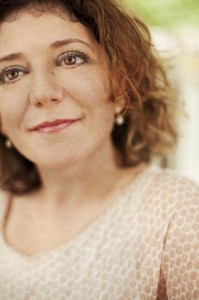
From Louisville. Live in Atlanta. Curious by nature. Researcher by education. Writer by practice. Grateful heart by desire.
Buy the Book!
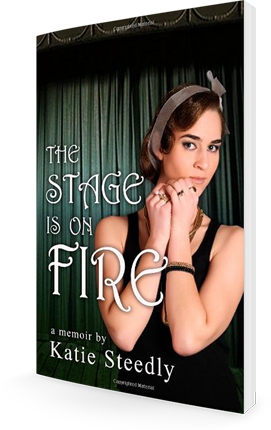
The Stage Is On Fire, a memoir about hope and change, reasons for voyaging, and dreams burning down can be purchased on Amazon.