[The Stage is on Fire] is a page-turner in which, much like life, there are no easy answers and yet each step of the journey yields insight and hope. This work of heart must not be missed!
Melanie Faith
Creative Writing Teacher, Essayist & Poet.
Katie Steedly’s first-person piece [The Unspeakable Gift] is a riveting retelling of her participation in a National Institutes of Health study that aided her quest to come to grips with her life of living with a rare genetic disorder. Her writing is superb.
The Society of Professional Journalists
In recognition of receiving the Dateline Award for the Washingtonian Magazine essay, The Unspeakable Gift.
I thank you … It is the authenticity of your “class notes”; and it is the delicacy and skill with which you present the nuances of classroom life and the actuality of your students’ and fellow teachers’ lives.
Maxine Greene
Philosopher and Education Scholar
Enter your email here to receive Weekly Wide-Awake
back
Living the Comma #53
Gratitude #1. Aliveness. Wandering Song. Kissing the Earth. 30 Days of Gratitude.
Living the Comma
Living the Comma is a writers community connecting people with a creative process, a writing practice, and a spiritual path. Everyone is welcome. No writing experience necessary.
Writers Hour — a weekly hour to write together — occurs every Thursday from 12:00-1:00 EST through May. Join via this link.
UPDATED — Living the Comma 2026-2027 Meeting Dates: September 1. October 13. November 10. December 8. January 12. February 9. March 9. April 13. May 11.
Living the Comma meetings occur at Virginia Highland Church from 7:00 to 8:30 EST. Join via our VIRTUAL MEETING LINK if you cannot be present in person.
The Living the Comma newsletter is published weekly.
Everything Is A Gift
Everything is a gift. The degree to which we are awake to this truth is a measure of our gratefulness, and gratefulness is a measure of our aliveness. ― Brother David Steindl-Rast
I taught a writing class in a men’s federal prison several years ago. I started one of our classes with the Steindl-Rast quote above. (I wrote about teaching the class here — “What I Learned about Gratitude from Teaching Writing in a Federal Prison.”) The class was comprised of a group of 10-15, mostly black and brown, men ages 18—80. Some students had not finished high school and others had graduate degrees. They reflected a breadth of reading and writing abilities. I was working on the gratitude project I am revisiting this month and I chose to focus the class on gratitude. My guiding question was — In what ways do you experience gratitude in your every day life? Students kept daily gratitude lists. During our weekly meetings we shared gratitude lists, responded to gratitude prompts, and worked toward a final piece that we would share during the last meeting.
After a training period with other writing instructors and several weeks shadowing in the classroom of the teacher/director who started the program several years prior, I began to teach my own class. Each week, for what would be almost two years — our time cut short by Covid — I entered the prison and taught our class. Entering the prison required surrendering my clear bag that was filled with approved pens and paper and student papers and whatever reading materials we would be covering. My bag and its contents were closely checked then returned. I was thoroughly frisked. They kept my purse — with my phone — under lock and key while I was teaching. Once that process was completed, and not a minute before, I was escorted through a series of locked doors into the classroom in a building adjacent to the “workshop” where inmates worked making a few cents on the dollar. This happened every week. Every week, the reality that I got to leave shook my core. Every week, the reality that I got to go home, when some of my students might never go home, broke my heart. Every week, the reality of liberty and justice and humanity brought tears to my eyes as I drove out the prison gate into my freedom.
The students amazed me. Their depth, courage, and humor. Their strength, vulnerability, and light. Their creativity, commitment, and kindness. We were encouraged not to search the internet for their stories. That is important. We were encouraged to get to know the students — who they were, not what they were convicted of. We sought goodness, built writing skills, created relationships, experienced fellowship, and found common humanity — our aliveness.
There is a wave of gratefulness because people are becoming aware how important this is and how this can change our world. It can change our world in immensely important ways, because if you’re grateful, you’re not fearful, and if you’re not fearful, you’re not violent. If you’re grateful, you act out of a sense of enough and not of a sense of scarcity, and you are willing to share. If you are grateful, you are enjoying the differences between people, and you are respectful to everybody, and that changes this power pyramid under which we live. ― Brother David Steindl-Rast
Aliveness is gratitude’s foundation. Aliveness grounds. Aliveness connects. Aliveness builds. Aliveness fortifies. Aliveness holds. Aliveness surrounds. Gratitude — from an aliveness perspective — provides space for gratitude in all our falling apart and back together, grief and joy, illness and health, and life and death. Abundance and grace and compassion breathe through aliveness. Steindahl-Rast understands, “In the continuous flow of blessing our heart finds meaning and rest.”
Wandering Song
“Listen, who hasn’t waited for something to happen? I know folks died waiting. I know hurt is a wandering song. I was lost in my fear.” ― Reginald Dwayne Betts
Gratitude as wandering song. Gratitude as faith while waiting. Gratitude as antidote to fear. Reginald Dwayne Betts helps me make sense of my time teaching writing — studying gratitude — in prison.
Prison teaches you what it means to be alone and what it means to lean on people who care about you. Inside, we built bonds over fleeting moments, breaking bread over meals, turning books we read into opportunities to see each other more clearly. And we stayed inventing a language of hope: calling letters kites, calling studying doing the math, remembering that one day you’d only have one day and a wake up left. When my confession announced me a convict, when the judge pronounced my sentence, I walked into a cell and called myself a writer. Sometimes it’s just a word that you hold onto until it becomes freedom. — Reginald Dwayne Betts
Gratitude as building bonds. Gratitude as seeing clearly. Gratitude as hope’s language. Gratitude as kite. Gratitude as making the most of the one day and a wake up left. Gratitude as becoming freedom. That kind of gratitude is bigger than a bumper sticker or refrigerator magnet. That kind of gratitude is balm on wounds. That kind of gratitude pays attention and does the math. That kind of gratitude is about muscle memory and aliveness.
Kissing the Earth
Walk as if you are kissing the Earth with your feet. ― Thich Nhat Hanh, Peace Is Every Step: The Path of Mindfulness in Everyday Life
Consider a gratitude kiss. A gratitude kiss softens. A gratitude kiss forgives. A gratitude kiss focuses. A gratitude kiss uplifts. A gratitude kiss inspires. A gratitude kiss imagines. A gratitude kiss illuminates. A gratitude kiss expands. Hanh explains, “The miracle is not to walk on water. The miracle is to walk on the green earth, dwelling deeply in the present moment and feeling truly alive.” Gratitude is miraculous. Our capacity to see is miraculous. Our capacity to heal is miraculous. Our capacity for awe is miraculous. Our capacity to change is miraculous. Aliveness is miraculous.
30 Days of Gratitude
On Gratitude
Why write love poetry in a burning world? To train myself, in the midst of a burning world, to offer poems of love to a burning world. — Katie Ferris
About a decade ago —searching for hope and desperate to make sense of our times— I reached out to people whose lives are love poems to our burning world. I cast my net far and wide amongst my heroes, those I knew up close and those I knew from a distance. I invited artists, business people, non-profit and union leaders, military, professors, psychologists, yogis, writers, and others into a dialogue about gratitude. I conducted, transcribed, edited, and published the gratitude interviews on my website.
It has been several years since the gratitude interviews. Change has happened in our lives. Births. Deaths. Jobs. Publications. Productions. Climate Change. A Pandemic. A Vaccine. Elections. Insurrection. Technology. Wars. Sunrise. Sunset. Moons. All matters of light and dark. Falling apart and back together. Breathing and stretching. Climbing mountains and exploring caves. Doing dishes and writing newsletters. I keep looking for gratitude. I keep paying attention to glimmers and delight. I keep holding tightly to gratitude — deep, abiding, warm, beautiful, sturdy, surprising, constant — even and especially when hard things happen. Consider each gratitude interview a window into grateful living. Consider each gratitude interview an evergreen example of gratitude’s constitution. Consider each gratitude interview a love poem to a burning world.
30 Days of Gratitude — Gratitude Conversations Days 1 and 2
Day 1 — A Psychology of Gratitude: A Gratitude Conversation with Dr. Anthony Ahrens
Day 2 — A Choice: A Gratitude Conversation with Aimee Imundo
Writing Exercise — Your Gratitude Story
Living the Comma Writing Exercises are inspired by the Beyond with Jane Ratcliff, The Isolation Journals with Suleika Jaouad, Letters From Love with Elizabeth Gilbert, the Mondays are Free writing project by Ross Gay and Patrick Rosal, The Clearing by Katherine May, and Writing in the Dark with Jeannine Ouelette communities.
Step 1: Start A Daily Gratitude Practice.
Start a daily gratitude practice. Make a list of big and small things, relationships and connections, places and experiences, favorites and must haves, realizations and blessings for which you are grateful. — or —Take a daily picture of something for which you are grateful. — or — Write a daily thank you note. — or — Explore your own gratitude practice. Choose a practice that resonates. Start the practice today. Continue along with me every day this month.
Step 2: Revisit Your Daily Gratitude Practice at the End of the Week.
At the end of the week, take a look at the breadth of your chosen gratitude practice. Choose an idea or image or story. Select an idea or image or story that can be developed into a narrative that details a who, what, when, why. Think about paying attention. Think about establishing a habit. Think about living the comma.
Step 3: Draft Your Gratitude Story.
Develop a story that connects detail, description, and desire. Think about aliveness. Think about your wandering song. Think about kissing the earth. Write between 300 — 500 words.
Step 4: Craft Your Gratitude Story.
Once you have drafted a gratitude story, read it aloud several times. Edit your story down to 200 words.
Step 5: Share Your Gratitude Story.
Take a moment to read your Gratitude Story aloud again. When ready, post your Gratitude Story in the comments to this post. Consider sharing your Gratitude Story with our writing group in-person.
Take a look at the gratitude conversations I am sharing this month. Revisiting them in preparation for 30 Days of Gratitude has sparked my soul. Make this month of gratitude and thanks move you closer to living the comma.
From the heart of the comma,
Katie
About Katie
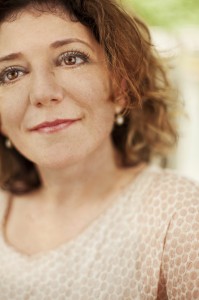
From Louisville. Live in Atlanta. Curious by nature. Researcher by education. Writer by practice. Grateful heart by desire.
Buy the Book!

The Stage Is On Fire, a memoir about hope and change, reasons for voyaging, and dreams burning down can be purchased on Amazon.