[The Stage is on Fire] is a page-turner in which, much like life, there are no easy answers and yet each step of the journey yields insight and hope. This work of heart must not be missed!
Melanie Faith
Creative Writing Teacher, Essayist & Poet.
Katie Steedly’s first-person piece [The Unspeakable Gift] is a riveting retelling of her participation in a National Institutes of Health study that aided her quest to come to grips with her life of living with a rare genetic disorder. Her writing is superb.
The Society of Professional Journalists
In recognition of receiving the Dateline Award for the Washingtonian Magazine essay, The Unspeakable Gift.
I thank you … It is the authenticity of your “class notes”; and it is the delicacy and skill with which you present the nuances of classroom life and the actuality of your students’ and fellow teachers’ lives.
Maxine Greene
Philosopher and Education Scholar
Enter your email here to receive Weekly Wide-Awake
back

Living the Comma #44
Our Fist Meeting. September 1st. Our Meetings This Year. Beginnings. Shitty First Drafts.
What will happen at Living the Comma this year?
We are at the beginning of our continuing writing adventure. I have listened to conversations I have had with writing group members and made a few changes to this year’s process. To tie the weekly Living the Comma newsletter with monthly meetings on the first Tuesday of each month, each month will have a theme, and each theme will be explored in each newsletter and meeting. The hope being that each newsletter and meeting tie together and encourage connection.
Dates and Themes: September 1 — Beginning. October 6 — Imagination. November 3 — Gratitude. December 1 — Joy. January 5 — Winter. February 2 — Love. March 2 — Grace. April 6 — Breath. May 4 — Finishing.
A weekly Writer’s Hour will be from 12:00 to 1:00 EST every Monday beginning September 14th (after Labor Day.) The Writer’s Hour will be an hour to gather weekly and write quietly together on an individual creative project.
A Writing Prompt
We will be writing about this prompt in our meeting on Tuesday.
I Begin Again, by Aura Brickler from The Book of Alchemy
Have you been bracing yourself for a new beginning? Perhaps one that is daunting yet inevitable, or maybe one that you’ve been hoping for and dreaming about. What will it take for you to get there? Who will be with you? What will it feel like when you get to the other side? If you’d like, use the refrain, “I will begin again as …”
The text of the Begin Again prompt.
Beginning from Stitches
We will be walking through these passages at our meeting on Tuesday.
I don’t know Who – or what – put the question, I don’t know when it was put. I don’t even remember answering. But at some moment I did answer Yes to Someone – or Something – and from that hour I was certain that existence is meaningful and that, therefor, my life, in self-surrender, had a goal. — Dag Hammerskjold, Markings
I heard Anne LaMott speak a few years ago during her book tour for the release of Stitches: A Handbook on Meaning, Hope, and Repair. I bought a signed copy of Stitchesthat night. I have gazed past the book for years on my bookshelf, always having something else to do or read. I turned to it recently in my search for meaning, hope, and repair.
Lamott starts, “Beginnings,” the first chapter of Stitches, with a question.
She asks, “Where is meaning in the meteoric passage of time, the speed in which our lives are spent? Where is meaning in the pits? In the suffering? I think these questions are worth asking?”
She then discusses finding meaning in specific crises — the list we all carry on our communal heart — and quotes a friend who says he has not yet found meaning. I live in the realm of not yet. I do not yet understand so many things right now. Full stop. I do not yet understand rejection of facts and science. Full stop. I do not yet understand a love of guns. Full stop. I do not yet understand why rich people must be so rich when that stratification of wealth leads to tremendous pain and suffering. Full stop.
Lamott shines light on our darkness.
“The equation is life, death, resurrection, hope. The hour is real, and so you make casseroles for your neighbor, organize an overseas clothing drive, and do your laundry. You can also offer to do other people’s laundry, if they have had any random babies or surgeries.”
It is comforting to me to think of life as this simple equation. Like falling apart and coming together, there is constant movement. Birth. Death. Rebirth. Perpetual spring on a personal scale.
I want to suggest Lamott thinks about the not yet on a personal scale. Within existential philosophy, there is an understanding that we are all not yet. Existentialists claim, “I am not yet.” We are all in the process of doing and becoming. Of blooming and shedding. Of opening and closing. Of starting and stopping. We are all not yet. We do everything we can do to ease suffering amidst it all. Perhaps casseroles and clothing drives are part of living the not yet. Perhaps birthday messages and phone calls are part of living the not yet. Perhaps holding doors for strangers and tipping at restaurants are part of living the not yet. Perhaps paying attention and telling stories are part of living the not yet. Perhaps forgiving and listening are part of living the not yet.
Shitty First Drafts
We will be walking through these passages at our meeting on Tuesday. Answer the questions in the comments section. We will share answers on Tuesday.
“E.L. Doctorow said once said that ‘Writing a novel is like driving a car at night. You can see only as far as your headlights, but you can make the whole trip that way.’ You don’t have to see where you’re going, you don’t have to see your destination or everything you will pass along the way. You just have to see two or three feet ahead of you. This is right up there with the best advice on writing, or life, I have ever heard.” ― Anne Lamott, Bird by Bird
- You are the parent of teenager. What advice would you offer as they are learning to drive at night and how might that advice connect with building a writing practice?
- In what ways does beginning rely on seeing two or three feet ahead? (Stated another way, can beginning happen if we can’t see two or three feet ahead of us?)
“Writing and reading decrease our sense of isolation. They deepen and widen and expand our sense of life: they feed the soul. When writers make us shake our heads with the exactness of their prose and their truths, and even make us laugh about ourselves or life, our buoyancy is restored. We are given a shot at dancing with, or at least clapping along with, the absurdity of life, instead of being squashed by it over and over again. It’s like singing on a boat during a terrible storm at sea. You can’t stop the raging storm, but singing can change the hearts and spirits of the people who are together on that ship.” ― Anne Lamott, Bird by Bird
- Do you agree or disagree with the idea that writing and reading decrease isolation, restore buoyancy, and allow us to clap along with life’s absurdity?
- I have felt extremely isolated the last few years and have sought to create ships in rough seas through hosting a monthly supper club, starting Living the Comma, and being active at Virginia Highland Church. How do you handle isolation?
“You are lucky to be one of those people who wishes to build sand castles with words, who is willing to create a place where your imagination can wander. We build this place with the sand of memories; these castles are our memories and inventiveness made tangible. So part of us believes that when the tide starts coming in, we won’t really have lost anything, because actually only a symbol of it was there in the sand. Another part of us thinks we’ll figure out a way to divert the ocean. This is what separates artists from ordinary people: the belief, deep in our hearts, that if we build our castles well enough, somehow the ocean won’t wash them away. I think this is a wonderful kind of person to be.” ― Anne Lamott, Bird by Bird
- What is the relationship between optimism and beginning? Between hope and beginning?
- How do we protect our artist’s belief that if we build our castles well enough the ocean won’t wash us away?
The text of “Shitty First Drafts,” Bird by Bird.
Looking forward to beginning a new year together. This newsletter will guide tomorrow’s discussion. Check out the prompt and “Shitty First Drafts” text. See you tomorrow.
From the heart of the comma,
Katie
Thanks for reading Living the Comma. Join our community and write and connect together.
About Katie
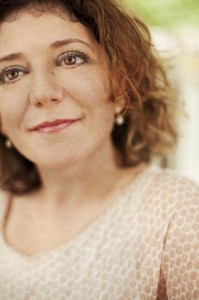
From Louisville. Live in Atlanta. Curious by nature. Researcher by education. Writer by practice. Grateful heart by desire.
Buy the Book!
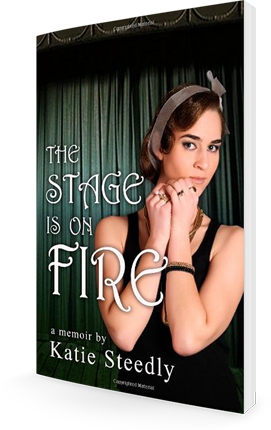
The Stage Is On Fire, a memoir about hope and change, reasons for voyaging, and dreams burning down can be purchased on Amazon.