[The Stage is on Fire] is a page-turner in which, much like life, there are no easy answers and yet each step of the journey yields insight and hope. This work of heart must not be missed!
Melanie Faith
Creative Writing Teacher, Essayist & Poet.
Katie Steedly’s first-person piece [The Unspeakable Gift] is a riveting retelling of her participation in a National Institutes of Health study that aided her quest to come to grips with her life of living with a rare genetic disorder. Her writing is superb.
The Society of Professional Journalists
In recognition of receiving the Dateline Award for the Washingtonian Magazine essay, The Unspeakable Gift.
I thank you … It is the authenticity of your “class notes”; and it is the delicacy and skill with which you present the nuances of classroom life and the actuality of your students’ and fellow teachers’ lives.
Maxine Greene
Philosopher and Education Scholar
Enter your email here to receive Weekly Wide-Awake
back
Weekly Wide-Awake #56
Mother’s Day. Summer Break. Listening, Guitars. Aunties.
You are enough.
The Mother’s Day message at church was “You are enough.” (Thank you Rev. Candace Rowell.) I let that dance in my mind. I let that wash over me. I let it settle into my bones. I often move between feeling less than or too much, falling apart and back together, anxious and exhausted, the I am and the not yet. On Mother’s Day, when I often feel left out of the conversation, words that affirmed the essence of my being as enough made my heart sing. On Mother’s Day, when the word “mother” — and what “mother” means to each of us, and it means different things to each of us — is on our lips. On Mother’s Day, when mothering of all sorts must be highlighted and lifted up as the vital work of life itself, the power-exploding thought that we are enough allowed the day to include me in a new way.
Being enough does not generally happen on Mother’s Day. Mostly, it is a day that affirms traditional gender roles and definitions and expectations that often leave me less than — less woman, less she-has-her-shit-together, less normal, less whole. (Cue the family holiday letters, pictures of first-days-of school, proms, weddings, grand babies, etc. that run on a loop in my mind’s feed.) Mother’s Day is often a reminder that being all the things is great but it does not by the traditional definition make me a mom.
As a Wife, Stepmother, Aunt, Daughter, Sister, Niece, Friend, and Community Member, mothering means so many different things. I was diagnosed with Turner syndrome at the age of 15. (That meant I did not have functioning ovaries and giving birth would be complicated, at best.) The diagnosis made me look at mothering — and how I would be a mother in this world — in a completely different light. I have grieved traditional motherhood. I have felt the deep loss and tried to convince myself that it was no big deal. I have realized what my life has included — though I have not given birth —has been pretty full and great, too. On most days, I understand traditional motherhood to include contexts and contours and complexity that require a soft and open heart. I am evolving.
Being enough has deep meaning. Being enough means I am not broken. I am whole. Being enough means I can love just as deeply and completely as anyone. (There is no love contest when we are all enough.) Being enough means our paths to mothering — and as mothers — is unique, beautiful, and enough, too. Being enough affirms that our choices — with all their messiness and meaning and star dust and scar tissue — are our own, and in that, we are enough.
Living the Comma #28
Summer Break. Poetry Outdoors. Cheryl Strayed.
Dear Writer Friends,
Yesterday, we gathered for our last face-to-face Living the Comma Writer’s Group before we take a summer break. It is hard to believe it has been 9 months since our first gathering. We will resume meeting again in September. The Living the Comma newsletter will continue during the summer months to keep us connected. I am grateful for the fierce bravery it takes to sit down and write and share what we write. I am grateful for the gentle reminder to tell our stories. I am grateful for our capacity to gather together and make our hearts, and world, a little softer and safer one story at a time.
MONDAYS ARE FREE EXERCISES 221-225
Listening. Magnolias. Doors. Darkness.
EXERCISE 221: PUTTING YOUR EAR TO THE CONCH SHELL
by hand
Write at least two full pages by hand about the pleasures of listening./ Be detailed. Use examples.
I appreciate listening. I appreciate what I learn when I listen. I appreciate the deep breath that accompanies listening. I appreciate the way a person being listened to appreciates being heard. I appreciate the relief, the release, the liberation that happens when I allow myself to simply listen, and not formulate a response, or think about where I have to go, or what I have to do, or get mired in shoulda, coulda, woulda. I appreciate the pace of listening. It reminds me of the ocean tide and phases of the moon.
I wish I was a better listener. I long for ripped listening muscles. I long to be a good listener. (I can list the good listeners in my life by name.) I long to push the boundaries of hearing into the listening realm. I don’t hear very well. I have diagnosed hearing loss at the pitch level of the human voice. So, I have to really listen to hear. Perhaps that is why I consider listening a sacred act. Like connection’s foundation. Like paying attention. Like everyday communion.
My Mother’s Guitar: A Gratitude Conversation With Roxanne Schroeder-Arce
KSC: What are a few things for which you are grateful?
RSA: I am grateful for opportunity. If you gave me a million dollars, I would think of all the places I could travel, all the experiences I could have, and all the people I could have visit me. It is awesome to live in a world where I am constantly overwhelmed with what I have, rather than living in a world where I am constantly wishing I had more.
RSA: There are possessions for which I am grateful. My mom died eight years ago. I got many gifts from her: music, a witty sense of humor, and a carefree sort of attitude about things. I also now have her instruments in my house. When you walk into my house, the first thing you see is an entryway. That is our music room. Carlos has his drums. We have a piano that was given to us by our neighbors. We have my mom’s instruments. I play each. We have her guitar and her bass guitar. I learned to play bass guitar since I got her bass. We have people over and we play music. When she passed, she did not have much. She still lived in the trailer park in which I grew up. She did not have a lot of things that were of value except for these instruments. My family members wanted me to have them. I treasure them for a variety of reasons. I keep playing them, and feel close to her. I am grateful for that.
KSC: When I think about you, I think about music. You are music. If you were going to put a gratitude playlist together of songs for which you are grateful, or make you think of gratitude, what would your gratitude playlist be?
RSA: “You Are My Sunshine.” That is a song I sang at my mom’s celebration of life. The words. You are honoring what someone else brings into your world. That is definitely gratitude. “Tu Solo Tu.” I sang it to Carlos around the time we were getting married. It makes me think of Carlos, and how dedicated he is to me. “She’ll Be Coming Around the Mountain” has to be there. “The Joker.” That song makes me think of my sister. There is a song the kids sing in the summer at our indigenous cultures camp, and it is called “Na Ham Kaum.” It is about water. It is in Coahuiltecan, which is an indigenous language. It is about sacred springs. The water is sacred to our people. You appreciate the water. You take care of the water. We are all responsible for that. That song makes me think about being grateful for what we are given, and that cycle of ‘we take care of something because it takes care of us.’
The Aunty Poem (Mi Privilege Es Su Privilege)
I am your aunty for life/ Here are clean sheets,/ and my spare key/ From Mohja Kahf’s The Aunty Poem (Mi Privilege Es Su Privilege)
I come from a long line of amazing Aunties. Aunt Bessie, my father’s Great Aunt who lived to the age of 94, taught me to never arrive somewhere empty handed or let someone leave on an empty stomach. My Great Aunts Ruth and Dottie, my mother’s Aunts, taught me the value of humor, family, and showing up. My Aunt Barbara shows up for it all, too. The quilt illustrating this post was made by my Aunt Toni. Lois and Ann, my mother’s sorority sisters, embody the power of female friendship and love. My notion of what it means to be an Aunty has also been shaped and formed by the strong female friendships I have made along the way.
Thanks for reading Weekly Wide-Awake. Subscribe to the Wide-Awakeness Project to explore writing, pay attention, and build community.
Weekly Wide-Awake #1
Weekly Wide-Awake #2
Weekly Wide-Awake #3
Weekly Wide-Awake #4
Weekly Wide-Awake #5
Weekly Wide-Awake #6
Weekly Wide-Awake #7
Weekly Wide-Awake #8
Weekly Wide-Awake #9
Weekly Wide-Awake #10
Weekly Wide-Awake #11
Weekly Wide-Awake #12
Weekly Wide-Awake #13
Weekly Wide-Awake #14
Weekly Wide-Awake #15
Weekly Wide-Awake #16
Weekly Wide-Awake #17
Weekly Wide-Awake #18
Weekly Wide-Awake #19
Weekly Wide-Awake #20
Weekly Wide-Awake #21
Weekly Wide-Awake #22
Weekly Wide-Awake #23
Weekly Wide-Awake #24
Weekly Wide-Awake #25
Weekly Wide-Awake #26
Weekly Wide-Awake #27
Weekly Wide-Awake #28
Weekly Wide-Awake #29
Weekly Wide-Awake #30
Weekly Wide-Awake #31
Weekly Wide-Awake #32
Weekly Wide-Awake #33
Weekly Wide-Awake #34
Weekly Wide-Awake #35
Weekly Wide-Awake #36
Weekly Wide-Awake #37
Weekly Wide-Awake #38
Weekly Wide-Awake #39
Weekly Wide-Awake #40
Weekly Wide-Awake #32
Weekly Wide-Awake #33
Weekly Wide-Awake #34
Weekly Wide-Awake #35
Weekly Wide-Awake #36
Weekly Wide-Awake #37
Weekly Wide-Awake #38
Weekly Wide-Awake #39
Weekly Wide-Awake #40
Weekly Wide-Awake #41
Weekly Wide-Awake #42
Weekly Wide-Awake #43
Weekly Wide-Awake #44
Weekly Wide-Awake #45
Weekly Wide-Awake #46
Weekly Wide-Awake #47
Weekly Wide-Awake #48
Weekly Wide-Awake #49
Weekly Wide-Awake #50
Weekly Wide-Awake #51
Weekly Wide-Awake #52
Weekly Wide-Awake #53
Weekly Wide-Awake #54
Weekly Wide-Awake #55
About Katie
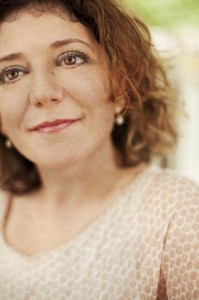
From Louisville. Live in Atlanta. Curious by nature. Researcher by education. Writer by practice. Grateful heart by desire.
Buy the Book!
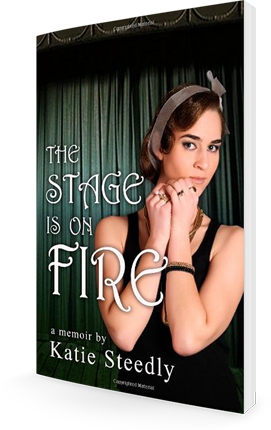
The Stage Is On Fire, a memoir about hope and change, reasons for voyaging, and dreams burning down can be purchased on Amazon.