[The Stage is on Fire] is a page-turner in which, much like life, there are no easy answers and yet each step of the journey yields insight and hope. This work of heart must not be missed!
Melanie Faith
Creative Writing Teacher, Essayist & Poet.
Katie Steedly’s first-person piece [The Unspeakable Gift] is a riveting retelling of her participation in a National Institutes of Health study that aided her quest to come to grips with her life of living with a rare genetic disorder. Her writing is superb.
The Society of Professional Journalists
In recognition of receiving the Dateline Award for the Washingtonian Magazine essay, The Unspeakable Gift.
I thank you … It is the authenticity of your “class notes”; and it is the delicacy and skill with which you present the nuances of classroom life and the actuality of your students’ and fellow teachers’ lives.
Maxine Greene
Philosopher and Education Scholar
Enter your email here to receive Weekly Wide-Awake
back
Living the Comma #21
Sangha. Two-Week Projects. Rest.
Dear Writer Friends,
I read an interview this week, “Rebecca Solnit Says the Left’s Next Hero Is Already Here.” (It is a great read!) Solnit explains,
One of the great weaknesses of our era is that we get lone superhero movies that suggest that our big problems are solved by muscly guys in spandex, when actually the world mostly gets changed through collective effort. Thich Nhat Hanh said before he died a few years ago that the next Buddha will be the Sangha. The Sangha, in Buddhist terminology, is the community of practitioners. It’s this idea that we don’t have to look for an individual, for a savior, for an Übermensch. I think the counter to Trump always has been and always will be civil society. A lot of the left wants social change to look like the French Revolution or Che Guevara. Maybe changing the world is more like caregiving than it is like war. Too many people still expect it to look like war. I denigrate politicians I don’t respect as windsocks. I just want us to understand that most of the important change is collective.
Our moment is about embracing the Sangha. Let me explain. Connection — families, friends, colleagues, neighbors, congregations, the stranger in line at PetSmart — are the pulse of collective effort. Protests, marches, door knocking, phone calls, postcards, letters, emails, and conversations are collective effort. I want to suggest the Sangha embraces it all and asks us to pay attention and mindfully and consistently and persistently act. Social change toward big love will happen together, and I agree with Solnit that it will look more like caregiving than war.
That is the ask. That is our charge. That is the prayer. Peace. In our heart. In our home. In our community. In our world. Expand our circle of influence to embrace our circle of concern through collective effort. For us writers, one word at a time.
Our next in person writing session will be April 13 (to accommodate Easter, which is April 5th) at VHC after snack time.
We are scheduled to meet from 12:15 to 1:30 in May, too. To virtually connect with the group during our meetings, use this link — https://us02web.zoom.us/j/85095318186.
This newsletter — Living the Comma — is delivered weekly to keep our community up-to-date and writing.
Our writing exercise this week is taken from Amie McNee. In an interview published in SheWrites Magazine, “Amie McNee’s Creative War Cry: Why the World Needs Your Art,” Christelle Lujan describes, “Living a creative life isn’t just about doing the work—it’s also about finding community, a challenge nearly every artist faces. … Amie McNee once felt that same creative solitude—and decided to do something about it.” She published We Need Your Art, a nonfiction creativity manifesto. (I have just finished reading it and found it a window into the tension between the need to create — and the life force that is creativity — and the day-to-day, voice-in-the-head energy that makes creativity difficult and sometimes impossible.
We Need Your Art outlines a two-week reset meant to address creative blocks and set a creative fire in an artist’s heart to come back to the work taking small bites at the creative project apple. McNee explains,
It’s just super easeful, super joyful, super doable. Art has been pedestaled to be this big, romantic, huge thing that we’re gonna need so much time and so much energy [to do]. It’s just bringing it back to a very doable reset. So that when we do fall out of touch with our art, it’s like, ‘It’s okay. I’ll just do a reset.’ And we get back into it, and we touch base again. [It’s] making it easeful, rather than a big, chaotic, exhausting reentry.
Think about a few small, gentle, creative steps you can take to make the art we all need.
After talking about collective effort and potential creative projects — knowing that I live already tired from the existential weight of now — I want to offer a little support for rest, too. Emma Gannon’s essay, “10 books to soothe your nervous system: 10 helpful books that focus on rest, relaxation & healing,” explores books that lift the weight. I will walk my way through this list, for sure.
So, take a breath. Think about the ways you care for yourself and others in the world. Think about the creative projects you carry, when you are really quiet and listen hard. Think about where you find peace and rest. Onward, together.
From the heart of the comma,
Katie
Living the Comma #1
Living the Comma #2
Living the Comma #3
Living the Comma #4
Living the Comma #5
Living the Comma #6
Living the Comma #7
Living the Comma #8
Living the Comma #9
Living the Comma #10
Living the Comma #11
Living the Comma #12
Living the Comma #13
Living the Comma #14
Living the Comma #15
Living the Comma #16
Living the Comma #17
Living the Comma #18
Living the Comma #19
Living the Comma #20
About Katie
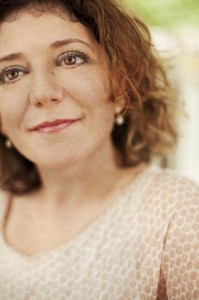
From Louisville. Live in Atlanta. Curious by nature. Researcher by education. Writer by practice. Grateful heart by desire.
Buy the Book!
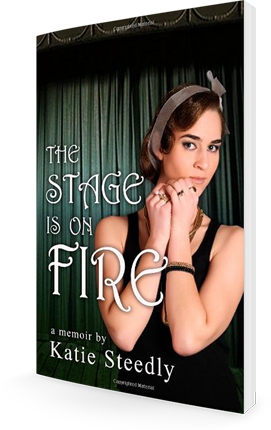
The Stage Is On Fire, a memoir about hope and change, reasons for voyaging, and dreams burning down can be purchased on Amazon.