[The Stage is on Fire] is a page-turner in which, much like life, there are no easy answers and yet each step of the journey yields insight and hope. This work of heart must not be missed!
Melanie Faith
Creative Writing Teacher, Essayist & Poet.
Katie Steedly’s first-person piece [The Unspeakable Gift] is a riveting retelling of her participation in a National Institutes of Health study that aided her quest to come to grips with her life of living with a rare genetic disorder. Her writing is superb.
The Society of Professional Journalists
In recognition of receiving the Dateline Award for the Washingtonian Magazine essay, The Unspeakable Gift.
I thank you … It is the authenticity of your “class notes”; and it is the delicacy and skill with which you present the nuances of classroom life and the actuality of your students’ and fellow teachers’ lives.
Maxine Greene
Philosopher and Education Scholar
Enter your email here to receive Weekly Wide-Awake
back

Weekly Wide-Awake #42
Memory. Pulling Words. Collage. Courage.
Memory as Fire
“You know what I think?” she says. “That people’s memories are maybe the fuel they burn to stay alive. Whether those memories have any actual importance or not, it doesn’t matter as far as the maintenance of life is concerned. They’re all just fuel. Advertising fillers in the newspaper, philosophy books, dirty pictures in a magazine, a bundle of ten-thousand-yen bills: when you feed ’em to the fire, they’re all just paper. The fire isn’t thinking ‘Oh, this is Kant,’ or ‘Oh, this is the Yomiuri evening edition,’ or ‘Nice tits,’ while it burns. To the fire, they’re nothing but scraps of paper. It’s the exact same thing. Important memories, not-so-important memories, totally useless memories: there’s no distinction — they’re all just fuel. — Haruki Murakami
What if memories — the lessons, the joys, the sorrows, the triumphs, the failures, the not enough, the too much, the falling apart, the falling back together, the roots, the buds, the wounds, the scar tissue — are fuel. Fuel to start and finish. Fuel to say yes and no. Fuel to be kind and connect. Fuel to keep our word and climb mountains. Fuel to build and create. Fuel for peace and truth. Fuel for justice and sanity.
Memories are wisdom. In taking stock and reflecting, in the coming together between what was, what is, and what will be we become wise. Wisdom as fuel. To paraphrase Maya Angelou, when we know better we do better. Remembering is a path to doing better. Memories are doing better fuel.
Memories are fuel to stay alive. They are roadmaps for what works and what does not. They are sustenance for our hungry selves. They are light shining into the cracks of our fears and doubts.
Living the Comma #14
Sunshine. Memory. Seasons.
Even trained for years as they all had been in precision of language, what words could you use which would give another the experience of sunshine? — Lois Lowry, The Giver
Dear Writer Friends,
This month’s Virginia Highland Church Banned Book Club pick was Lois Lowry’s The Giver. The story’s young protagonist, Jonas, is given the important Receiver of Memory role in his community. In thinking about stories, memories, and words, writing gives form to our past, present, and future. Words — even the most precise language — may never capture the experience of sunshine, but as memory’s container, as interlocutor between what was and what is and what will be, their value is immeasurable. That is the power of telling our stories to one another and writing our stories down. Coming together to remember and share our stories invites us to understand, notice, and fully live.
Spit and Spaghetti #8
Pitches from Wind and Wall
Travel + Leisure
Pulling Words and Leading Out: Thoughts from the Museum of Literature Ireland
One word pulled her toward the next, leading her out of herself — Lia Mills
I left myself as I walked through the Museum of Literature Ireland (MoLI) in Dublin. One word pulled me to the next. Around each corner through books and portraits, text and images, present time and history, sunlight and gardens, poems and coffee. I fell out of myself and in love with words again, again, and again. My trip to the MoLI set my writing soul on fire. This story will connect travel with our soul’s work, explore what it means to lose ourselves in culture and language, and ask the question, “In what ways does culture and language matter?” At this time when life moves fast, Travel + Leisure readers will be asked to slow down and consider the beauty and meaning of our stories, what we win when we lose ourselves, and the value of culture and language.
MONDAYS ARE FREE EXERCISES 166 — 170
Collage. Bureaucracy. Riff. Image. Form.
EXERCISE 167: AGAINST BUREAUCRACY
in the manner of its use critiques
Write a poem which uses and in the manner of its use critiques some kind of official language—perhaps state or state-adjacent language; something a judge or a governor or an edict or a law might say; a deposition or a report or a citation; something from an educational or medical authority; etc.
The AmeriCorps Pledge
I will get things done for America – to make our people safer, smarter, and healthier./ I will bring Americans together to strengthen our communities./ Faced with apathy, I will take action./ Faced with conflict, I will seek common ground. Faced with adversity, I will persevere.
I will carry this commitment with me this year and beyond. I am an AmeriCorps member, and I will get things done.
September 1997. We took the Pledge. 25,000. The first year. All fifty states. Rural, urban, and everything in between. Every age. Every color. Every love. Paying education forward. Holding communities close. Steeping dreams like tea. The best of us for all of us.
Today, it is personal.
It’s personal. Our government killing us. It’s personal. Corruption breaks our back. It’s personal. Our healthcare system gutted by billionaires. It’s personal. The rule of law shaken to its core. It’s personal. Courts overruled in the shadows. It’s personal. Immunity. It’s personal. Corporations are people. It’s personal. Books burned. It’s personal. The earth burned. It’s personal. Our vote stolen. It’s personal.
Singing to the choir makes beautiful music. It’s personal. Holding hands forms a strong chain. It’s personal. The sea is so big and our boat is so small. It’s personal. Sí se puede. It’s personal. Hope and Change. It’s personal. Love bends the moral arc of the universe. It’s personal. There are more of us than there are of them. It’s personal. Love is. Love is. Love is. It’s personal. We stand and put our hand over our heart. It’s personal. Our children weep. It’s personal.
Thanks for reading Weekly Wide-Awake. Subscribe to the Wide-Awakeness Project to explore writing, pay attention, build community.
Weekly Wide-Awake #1
Weekly Wide-Awake #2
Weekly Wide-Awake #3
Weekly Wide-Awake #4
Weekly Wide-Awake #5
Weekly Wide-Awake #6
Weekly Wide-Awake #7
Weekly Wide-Awake #8
Weekly Wide-Awake #9
Weekly Wide-Awake #10
Weekly Wide-Awake #11
Weekly Wide-Awake #12
Weekly Wide-Awake #13
Weekly Wide-Awake #14
Weekly Wide-Awake #15
Weekly Wide-Awake #16
Weekly Wide-Awake #17
Weekly Wide-Awake #18
Weekly Wide-Awake #19
Weekly Wide-Awake #20
Weekly Wide-Awake #21
Weekly Wide-Awake #22
Weekly Wide-Awake #23
Weekly Wide-Awake #24
Weekly Wide-Awake #25
Weekly Wide-Awake #26
Weekly Wide-Awake #27
Weekly Wide-Awake #28
Weekly Wide-Awake #29
Weekly Wide-Awake #30
Weekly Wide-Awake #31
Weekly Wide-Awake #32
Weekly Wide-Awake #33
Weekly Wide-Awake #34
Weekly Wide-Awake #35
Weekly Wide-Awake #36
Weekly Wide-Awake #37
Weekly Wide-Awake #38
Weekly Wide-Awake #39
Weekly Wide-Awake #40
Weekly Wide-Awake #41
About Katie
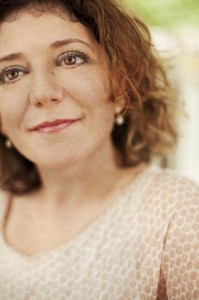
From Louisville. Live in Atlanta. Curious by nature. Researcher by education. Writer by practice. Grateful heart by desire.
Buy the Book!

The Stage Is On Fire, a memoir about hope and change, reasons for voyaging, and dreams burning down can be purchased on Amazon.