[The Stage is on Fire] is a page-turner in which, much like life, there are no easy answers and yet each step of the journey yields insight and hope. This work of heart must not be missed!
Melanie Faith
Creative Writing Teacher, Essayist & Poet.
Katie Steedly’s first-person piece [The Unspeakable Gift] is a riveting retelling of her participation in a National Institutes of Health study that aided her quest to come to grips with her life of living with a rare genetic disorder. Her writing is superb.
The Society of Professional Journalists
In recognition of receiving the Dateline Award for the Washingtonian Magazine essay, The Unspeakable Gift.
I thank you … It is the authenticity of your “class notes”; and it is the delicacy and skill with which you present the nuances of classroom life and the actuality of your students’ and fellow teachers’ lives.
Maxine Greene
Philosopher and Education Scholar
Enter your email here to receive Weekly Wide-Awake
back
MONDAYS ARE FREE 071 — 075
Home. Falling. Curating. Ghosts.
EXERCISE 071: GIVE ROUNDABOUT DIRECTIONS
how to get somewhere
Write a poem in which the speaker gives narrative directions to the reader, i.e., how to get somewhere, infused with stories.
How to get there from here.
Thank you, Natasha Trethewey. When I read your words, “You can get there from here, though/ there’s no going home.” I thought about home differently. When my parents sold our family home — which they had owned for 40 or so years, in which I had not lived for many years, but always returned — a few years ago, I newly understood your wisdom. I thought about the coordinates of joy and grief and change. I thought about waves of time and story and the river’s flow. I thought about how everything looks bigger in our mind’s eye, especially the chapel in my childhood church. I thought about how I define home as a grown up. I thought about the persistence of the thought that one day I would not remember where to turn left onto Longview Drive, or how to ride our bikes to Dairy Queen on summer afternoons, or how to get around when Utica Pike which flooded every spring, or how to find fossils in the Falls of the Ohio, or King Fish on the River, or manicotti at Lentini’s Little Italy, or Tumbleweed beef and cheese burrito enchilada style, or the Louisville Slugger, or Cats at the Kentucky Center in an emerald velvet dress. I close my eyes and let me shoulders relax.
You tell me, “Bring only/what you must carry—tome of memory/ its random blank pages.” That feels important in the way that healing is important. That feels important in the way that clocks mark time. That feels important in the way that blank pages scare and invite, tremble and breathe, tense and release. A Balinese healer once told me, “You don’t have to carry that weight.” He must have understood about weight, too. We can never really go back.
EXERCISE 072: FALL IN REVERSE
start at the last line
Write a poem, three words per line, about falling down. Start at the last line of an empty page and keep writing until you get to the top.
Getting back up
From atop glaciers
Helicopters excluded occasionally
Personal immersion therapy
Life without control
Perpetual stomach ache
Lack of imagination
Creative edge paralysis
Blind can’t hear
I hate falling
EXERCISE 073: CURATE A MUSEUM, PART I
objects you have broken
Make a list of objects you have broken. Curate a Museum of Broken Things by writing a short text that will appear in the gallery. The text should include a description of each object, the story of its breaking, as well as the month, day, and year of its breaking (if you don’t know, make it up).
The Knowles plates that were on my bedroom walls as a child. They broke in random, numerous, cross-country moves between 1990 and 2025. Several pieces of Hadley pottery given to me by my Aunt and Uncle for my wedding. They broke during a move in April of 2021 from Miami to Atlanta. House plants I have killed. Continuously. I consider killing houseplants a form of breaking. I have an overwatering issue. I am going to expand the notion of “objects I have broken” to include a few relationships, too. Broken relationships hurt in the way pieces never quite fit back together. There is a reciprocity to broken relationships, in that we are complex and complicated and in some ways broken before we enter relationships. I am reminded of falling apart and back together Pema Chödrön talks about. My museum of broken things would be a collection of broken connections, moments no longer celebrated, wounds that heal as scar tissue forms.
EXERCISE 074: CURATE A MUSEUM, PART II
objects you have lost
Make a list of objects you have lost. Curate a Museum of Lost Things by writing a short text that will appear in the gallery. The text should include a description of each object, the story of its loss, as well as the month, day, and year of its loss (if you don’t know, make it up).
What is the difference between breaking and losing? Grief plays a part in both. Pain plays a part in both. Absence plays a part in both. Losing connection — friends that have been part of my life for seasons and years and decades. Losing the whole amidst fragments and brokenness. Losing hope amidst crises and fear. Losing compassion amidst anger and cruelty. Losing strength amidst conflict and overwhelm. Losing breath amidst shock and overwhelm. My Museum of Lost Things would be a collection of moments of grief, pain, and absence. A kaleidoscope of glass shards that are both beautiful and complex and can be viewed from many angles.
EXERCISE 075: FACE THE GHOST IN NEED
this newfound thing
My wife and I are both prone to losing things—the wind takes her earring; a cherished book drops from my open bag. We tell each other a ghost needed the thing more than we did. Describe an object or item you lost that was dear to you and describe the ghost that took possession of it and what that ghost does with this newfound thing.
A ghost, Silence, stole my words. My words have always been dear. I lost my words to Silence. I lost my story to Silence. I lost my song to Silence. I first knew Silence when I was a young writer and wrote page after page on lined notebook paper and hid them in red folder. I wrote poems and stories, songs and reports, journal entries and prayers. I kept writing and writing and writing. I kept reading and reading and reading. Silence shrouded my words in fear and distraction and overwhelm. Silence hid my words in darkness and confusion and anger. Silence jammed my signal with noise and static and dislocation. Silence robbed me of imagination. This is not a hopeless moment. My words are not lost. My I am and as if and not yet can be found by holding Silence close and allowing Silence to comfort and inspire and guide. Perhaps Silence can help me weave words into story, voice into song, narrative into justice and peace.
MONDAYS ARE FREE 001 — 003
MONDAYS ARE FREE 004 — 006
MONDAYS ARE FREE 007— 010
MONDAYS ARE FREE 011 — 015
MONDAYS ARE FREE 016 — 020
MONDAYS ARE FREE 021 — 025
MONDAYS ARE FREE 026 — 030
MONDAYS ARE FREE 031 — 035
MONDAYS ARE FREE 036 — 040
MONDAYS ARE FREE 041 — 045
MONDAYS ARE FREE 046 — 050
MONDAYS ARE FREE 51 – 55
MONDAYS ARE FREE 56 — 60
MONDAYS ARE FREE 61 — 65
MONDAYS ARE FREE 66 — 70
Thanks for reading MONDAYS ARE FREE. Subscribe to the Wide-Awakeness Project.
About Katie
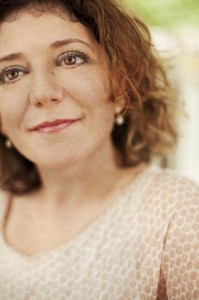
From Louisville. Live in Atlanta. Curious by nature. Researcher by education. Writer by practice. Grateful heart by desire.
Buy the Book!
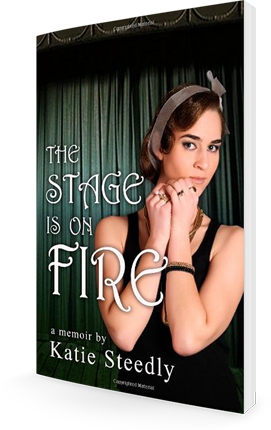
The Stage Is On Fire, a memoir about hope and change, reasons for voyaging, and dreams burning down can be purchased on Amazon.