[The Stage is on Fire] is a page-turner in which, much like life, there are no easy answers and yet each step of the journey yields insight and hope. This work of heart must not be missed!
Melanie Faith
Creative Writing Teacher, Essayist & Poet.
Katie Steedly’s first-person piece [The Unspeakable Gift] is a riveting retelling of her participation in a National Institutes of Health study that aided her quest to come to grips with her life of living with a rare genetic disorder. Her writing is superb.
The Society of Professional Journalists
In recognition of receiving the Dateline Award for the Washingtonian Magazine essay, The Unspeakable Gift.
I thank you … It is the authenticity of your “class notes”; and it is the delicacy and skill with which you present the nuances of classroom life and the actuality of your students’ and fellow teachers’ lives.
Maxine Greene
Philosopher and Education Scholar
Enter your email here to receive Weekly Wide-Awake
back

Weekly Wide-Awake #35
Holiday Letters. Bookshelves. Turkey Soup.
Living the Comma #7
I manage a toast to the Christmas tree and one to the sweet absurdity in the miracle of the verb to be. Lucky you, lucky me.” ― Miller Williams
Dear Writer Friends,
This week, I am writing on our annual Holiday letter. I am old fashioned and still send paper letters and cards via the mail. It does not matter that sending Holiday letters has gone the way of iPods and landlines. I still believe in touching base, taking a minute, and sitting still long enough to let people know they are in our thoughts. As a writer, it feels important to use my words to share my story, in the hopes that connection fires. The quote above was part of last year’s Holiday letter. The letter focused on naming the everyday miracles in our lives.
I will always write Holiday letters. Let me explain. Holiday letters are an exercise in radical love. Radical love demands — and will continue to demand — that we build safe spaces for our stories. In a small way, my Holiday letter is my attempt to do that. I will always take stock of my years. I will always pause to say thank you. I will always reach out, especially when it is challenging and I want to crawl into a hole and pretend that it will all go away.
Holiday letters occupy a unique space. They are meaningful connection that does not wait for babies, funerals and/or weddings. They are a low-impact way to flex our relationship muscles. They are valuable in the way they require sifting through what matters (and does not) about our day-to-day — it is always interesting to see what bubbles up (and does not) in our stories.
Thank you for a wonderful writing session this Sunday. Our next face-to-face writing session is this Sunday, January 4th. To virtually connect with the group on the 4th, use this link — https://us02web.zoom.us/j/85095318186.
This week, let’s take a look at Martha Beck’s writing prompt from The Book of Alchemy, “Awakening your inner genius,” Mark Nepo’s reflections on December 8th, and Cheryl Strayed’s story of the ordinary miraculous.
Now off to gather and write and tell our 2025 story to our family and friends in our Holiday letter.
From the heart of the comma,
Katie
MONDAYS ARE FREE EXERCISES 136—140
EXERCISE 136: WHAT CAN YOU (NOT) DO WITHOUT?
as a reminder
Write an anaphora poem using the phrase “Without which”
The Bookshelf In My Childhood Bedroom
Without which, I would have never learned to love to read and write. Without which, I would have never learned to memorize poems. Without which, I would have never learned the stories of Margaret, Ralph, Sally J., James, Trixie, Wolf, Charlie, Nancy, Winken, Blinken, and Nod. Without which, I would not have explored the world. Without which, the constant presence of bookshelves —wherever I have lived, and I have lived many places over the years — would have not comforted each life transition. Without which, curiosity’s joy would not have taken root in a soul meant to ask big questions. Without which, my love of words might have stayed a brief flirtation, a passing glance rather than a deep abiding quest. Without which, my as if, not yet, the I am would be a pale ghost companion to a restless shadow self. Without which, every tool would be a hammer and all hardware a nail. Without which, history would tell limited stories. Without which, life’s lyrics would be a silent song. Without which, my paying attention muscles would atrophy. Without which, the seeds of being a writer would not have been sown. Without which, my heart would be heavier. Without which, I would have less hope.
Turkey Soup
An Image in Four Parts
She said to pay attention to the turkey soup —/ the way it tastes/ the saltiness, the soupiness, the sturdiness. She said nothing else mattered, just taste,/ but instead I keep thinking about the lessons of her kitchen,/ the time I was with the women in my family — recipes and stories, apprenticeship and generosity, attention and testament/ how the meat and vegetables and spices stretched out like a road map to somewhere magical as we gathered and boiled and simmered/ Again, she reminded us to put it all aside (the I am not yet) and focus on the turkey soup —/ to stay with it, trust it, become it —/ but the minute I try, I smell tomorrow and yesterday,/ see death and childhood,/ hear doubt and faith,/ and here I am a grown up with all my sense-making muscles, mainly, in tact,/ watching the world as something I can’t explain./ Someone else, maybe even you, might say … Isn’t this cheating? Aren’t you supposed to stick to turkey soup? It’s just turkey soup./ And maybe they’re right. Maybe I am a hypocrite./ After all, I once promised I would plant irises,/ swore I’d remember birthdays —/ and then the kaleidoscope broke into a million tiny mirrors./ So yes — the turkey soup./ I see it now: savor./ Even still, as I watch, it becomes comfort, which/ becomes gratitude and delight,/ We share turkey soup: from heart, recipe, hands, kitchen, large pots, small containers, steps to other hands. I remember it all.
Spit and Spaghetti #4
Pitches from Wind and Wall
Feeding the Good Wolf — An Oral History of B. Mifflin Hood
“Why write love poetry in a burning world? To train myself, in the midst of a burning world, to offer poems of love to a burning world.” — Katie Farris
The Project
I am an applied researcher living in Atlanta across the street from a beautiful, historically designated, renovated-so-people-can-live-there brick factory, the B. Mifflin Hood Brick Company. B. Mifflin Hood was an activist brick maker who stood against convict leasing, a prevalent practice in the post-Civil War United States.// I aim to tell the story of a space that brings together art, history, and activism. It will answer the questions: What can/does resistance look like? What role can/does art play in resistance, creating community, and pursuing justice? What can a building teach us as a conduit for history, testimony to justice, and substance of/for resistance?// After years of living next to the space and insightful conversations with the artist/activist couple who renovated it and now call it home, the architect who redesigned it, and the artist who created the public art outside it. I am prepared to explore the person and space. I am ready to offer a love letter to art, history, and activism.
Thanks for reading Weekly Wide-Awake. Subscribe to the Wide-Awakeness Project.
Weekly Wide-Awake #1
Weekly Wide-Awake #2
Weekly Wide-Awake #3
Weekly Wide-Awake #4
Weekly Wide-Awake #5
Weekly Wide-Awake #6
Weekly Wide-Awake #7
Weekly Wide-Awake #8
Weekly Wide-Awake #9
Weekly Wide-Awake #10
Weekly Wide-Awake #11
Weekly Wide-Awake #12
Weekly Wide-Awake #13
Weekly Wide-Awake #14
Weekly Wide-Awake #15
Weekly Wide-Awake #16
Weekly Wide-Awake #17
Weekly Wide-Awake #18
Weekly Wide-Awake #19
Weekly Wide-Awake #20
Weekly Wide-Awake #21
Weekly Wide-Awake #22
Weekly Wide-Awake #23
Weekly Wide-Awake #24
Weekly Wide-Awake #25
Weekly Wide-Awake #26
Weekly Wide-Awake #27
Weekly Wide-Awake #28
Weekly Wide-Awake #29
Weekly Wide-Awake #30
Weekly Wide-Awake #31
Weekly Wide-Awake #32
Weekly Wide-Awake #33
Weekly Wide-Awake #34
About Katie

From Louisville. Live in Atlanta. Curious by nature. Researcher by education. Writer by practice. Grateful heart by desire.
Buy the Book!
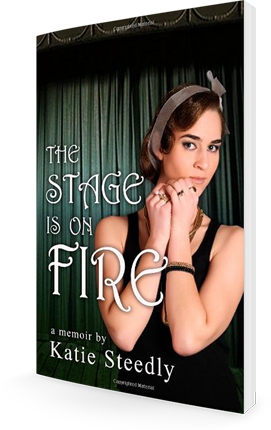
The Stage Is On Fire, a memoir about hope and change, reasons for voyaging, and dreams burning down can be purchased on Amazon.